
Surprising New Dementia Risk Factors & Prevention Guide
Scientists Discovered Surprising New Risk Factors for Dementia
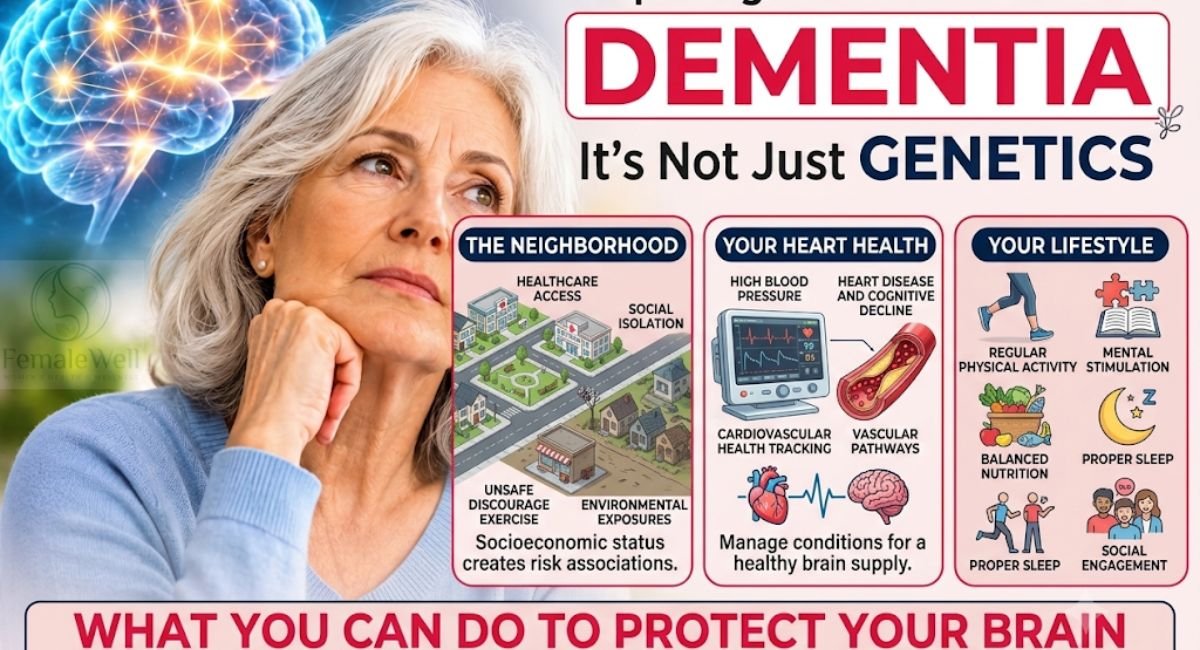
DEMENTIA is often linked to AGEING, FAMILY HISTORY and GENETICS. However, SCIENTISTS are uncovering another important piece of the puzzle: where you live may influence your BRAIN HEALTH. Recent clinical insights—paralleling advancements in AI IN HEALTHCARE and preventive HEALTHCARE TECHNOLOGY—suggest that NEIGHBORHOOD DISADVANTAGE, LIMITED RESOURCES and UNEQUAL ACCESS TO HEALTHCARE may contribute significantly to COGNITIVE DECLINE.
These findings expand our understanding of DEMENTIA RISK FACTORS beyond personal medical history and relate closely to findings in AI in Mental Health research. Although you cannot control every ENVIRONMENTAL INFLUENCE, understanding these connections—much like exploring our guide on Interstitial Cystitis Relief Whole Body Approach—can help you make informed decisions about DEMENTIA PREVENTION and long-term COGNITIVE HEALTH.
Scientists Just Discovered a Surprising New Risk Factor for DEMENTIA & It Has Nothing to Do with GENETICS
Your surroundings may matter more than you realize. A study published in NEUROLOGY in March 2025 examined the relationship between NEIGHBORHOOD SOCIAL VULNERABILITY and ALZHEIMER’S DISEASE. Researchers found that people living in more socially vulnerable communities had higher odds of developing ALZHEIMER’S DISEASE. This clinical research—supported by modern advancements in AI IN HEALTHCARE and digital Healthcare Technology—highlights an important aspect of DEMENTIA RISK beyond personal GENETICS.
The findings also raise critical questions about NEIGHBORHOOD SOCIOECONOMIC DISADVANTAGE and its profound influence on HEALTHY AGEING. Limited HEALTHCARE ACCESS, financial insecurity, and fewer community resources can affect overall well-being—much like navigating wellness markers detailed in our Lab Result Explainer Guide. These circumstances may increase exposure to several health problems associated with COGNITIVE DECLINE. However, the study established an ASSOCIATION rather than proving direct CAUSATION.

What Did the Study Find?
Researchers examined 6,781 adults aged 65 and older through the CHICAGO HEALTH AND AGING PROJECT. Participants lived in four Chicago communities covering 24 census tracts. The study found approximately twice the odds of an Alzheimer’s disease diagnosis among participants in higher-vulnerability neighborhoods compared with those in the least vulnerable areas. Their annual COGNITIVE DECLINE was also approximately 25% faster in the most vulnerable group.
| Research Finding | Reported Result |
|---|---|
| PARTICIPANTS | 6,781 adults |
| AVERAGE AGE | 72 years |
| STUDY LOCATION | Chicago, USA |
| HIGHER NEIGHBORHOOD VULNERABILITY | Approximately twice the odds of ALZHEIMER’S DISEASE |
| COGNITIVE DECLINE | Approximately 25% faster in the highest-vulnerability group |
Importantly, these figures describe statistical ASSOCIATIONS, not an individual’s personal probability of developing ALZHEIMER’S DISEASE. You can monitor your key biomarkers and metabolic indicators using our interactive Lab Result Explainer Guide.
More On Dementia Risk Factors
Although neighborhood conditions deserve attention, several established DEMENTIA RISK FACTORS can influence brain function. Advancing age and GENETIC RISK FACTORS are important considerations, but they do not determine everyone’s future. HIGH BLOOD PRESSURE, uncontrolled DIABETES, CARDIOVASCULAR DISEASE, and OBESITY can damage blood vessels and affect the brain—topics closely monitored with tools like the Blood Pressure Reading Explainer & Monitor Log Tool.
Similarly, SMOKING, PHYSICAL INACTIVITY, EXCESSIVE ALCOHOL CONSUMPTION, and SOCIAL ISOLATION may contribute to declining cognitive health. Managing systemic risk factors through routine health checks like an HbA1c Glucose Converter Calculator supports overall cardiovascular and neurological resilience.
The 2024 Lancet Commission identified 14 potentially modifiable risk factors, including untreated VISION LOSS and high LDL CHOLESTEROL. These findings demonstrate that ALZHEIMER’S RISK involves multiple interacting influences rather than one isolated cause.
Why is DEMENTIA RISK linked with certain types of neighborhoods?
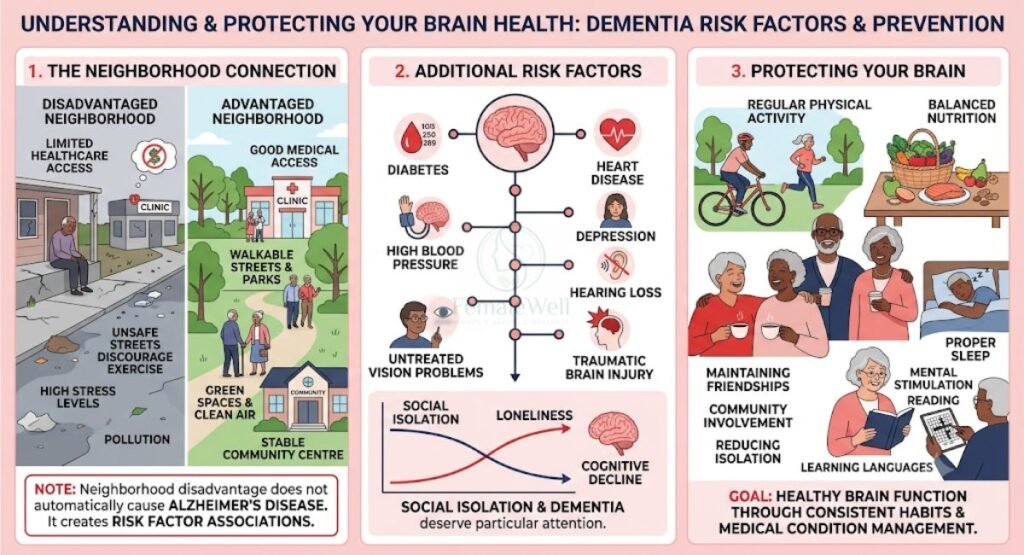
The connection becomes clearer when we examine SOCIAL DETERMINANTS OF HEALTH. These include income, education, housing, employment, and access to medical services. People living in disadvantaged neighborhoods may face several obstacles simultaneously. Limited HEALTHCARE ACCESS can delay treatment for chronic conditions, while unsafe streets may discourage walking and outdoor activities—aspects also evaluated in wellness tracking guides like our Lab Result Explainer Guide.
The neighborhood environment can also influence STRESS LEVELS, SOCIAL CONNECTIONS, and everyday habits. Researchers are investigating how pollution, limited green spaces, and fewer recreational facilities affect community health. These conditions may contribute to HEALTH DISPARITIES and influence the relationship between neighborhood and dementia. However, neighborhood disadvantage does not automatically mean someone will develop ALZHEIMER’S DISEASE.
What else raises your DEMENTIA RISK?
Beyond residential conditions, several LIFESTYLE FACTORS can influence the risk of developing dementia. DIABETES AND DEMENTIA RISK are closely studied because prolonged high blood sugar can damage blood vessels. Likewise, HEART DISEASE AND COGNITIVE DECLINE share important vascular pathways—making cardiovascular tracking tools like the AI in Cardiology resources highly relevant. HIGH BLOOD PRESSURE and dementia are also linked through damage to the brain’s blood supply, monitored closely alongside tools such as the Blood Pressure Reading Explainer & Monitor Log Tool. Other concerns include DEPRESSION, HEARING LOSS, untreated VISION PROBLEMS, and TRAUMATIC BRAIN INJURY.
SOCIAL ISOLATION AND DEMENTIA deserve particular attention because meaningful relationships support emotional well-being and COGNITIVE ENGAGEMENT. Similarly, LONELINESS AND BRAIN HEALTH are connected through several possible psychological and behavioral pathways. Your EDUCATION LEVEL, access to healthcare, and lifelong opportunities may also influence COGNITIVE RESILIENCE.
How can I best protect my brain?
The good news is that you can take meaningful steps towards protecting long-term BRAIN HEALTH. Regular PHYSICAL ACTIVITY, balanced NUTRITION, and proper SLEEP support cardiovascular and cognitive health—similar to healthy metabolic balance protocols managed via tools like the Diabetes Meal Carb Calculator. Activities that encourage MENTAL STIMULATION, such as reading, learning languages, and solving puzzles, can keep your mind engaged. Equally important, maintaining friendships and participating in community activities can reduce isolation.
The goal is supporting HEALTHY BRAIN FUNCTION through consistent habits. Combining regular physical activity and mental stimulation with proper management of medical conditions may support overall health and cognitive resilience. These habits contribute to HEALTHY BRAIN AGING, although no lifestyle routine can guarantee that dementia will never develop.
FAQs about Surprising New Risk Factors for DEMENTIA
Understanding the latest research can help you recognize factors influencing DEMENTIA RISK and make informed health decisions. The following answers address common questions about GENETICS, neighborhood conditions, and PREVENTION—integrated with wellness guidelines found in our Lab Result Explainer Guide.
NEIGHBORHOOD SOCIAL VULNERABILITY has emerged as an important research area. A 2025 Neurology study associated greater neighborhood disadvantage with higher odds of Alzheimer’s disease and faster cognitive decline.
Research suggests that neighborhood SOCIOECONOMIC STATUS may influence DEMENTIA RISK through HEALTHCARE ACCESS, financial conditions, and environmental exposures—comparable to metrics evaluated using tools like the Blood Pressure Reading Explainer & Monitor Log Tool. However, living in a disadvantaged area does not guarantee a DIAGNOSIS.
No. GENETICS can influence susceptibility, particularly through variants such as APOE ε4. However, ENVIRONMENTAL EXPOSURES, medical conditions, and LIFESTYLE CHOICES also contribute significantly to DEMENTIA RISK.
Healthy habits may help reduce risk. Regular EXERCISE, balanced NUTRITION, quality SLEEP, SOCIAL ENGAGEMENT, and management of chronic conditions can support long-term COGNITIVE HEALTH—supported by wellness structures like our Interstitial Cystitis Relief Whole Body Approach.
The 2024 Lancet Commission identified lower education, hearing loss, high LDL cholesterol, depression, traumatic brain injury, physical inactivity, diabetes, smoking, hypertension, obesity, excessive alcohol consumption, air pollution, social isolation, and untreated vision loss as key modifiable factors influencing BRAIN HEALTH.
BRAIN HEALTH deserves attention throughout life. Healthy habits during childhood, adulthood, and older age can influence long-term COGNITIVE HEALTH. It is never too early or too late to address modifiable risk factors and support lifelong COGNITIVE RESILIENCE.
Medical References & Further Reading
The following authoritative sources support the CLINICAL RESEARCH, EPIDEMIOLOGICAL DATA, and DEMENTIA PREVENTION strategies discussed in this article:
- NEUROLOGY – The Social Vulnerability Index and Incidence of Alzheimer Disease (2025)
- THE LANCET – Dementia Prevention, Intervention and Care (2024)
- WORLD HEALTH ORGANIZATION – Risk Reduction of Cognitive Decline and Dementia (2026)
- CENTERS FOR DISEASE CONTROL AND PREVENTION (CDC) – Reducing Risk for Dementia
- NATIONAL HEALTH SERVICE (NHS) – Can Dementia Be Prevented?
MEDICAL EDITORIAL NOTE
This article is intended for educational purposes and is based on available MEDICAL RESEARCH and trusted HEALTHCARE GUIDANCE. It is not a substitute for professional MEDICAL ADVICE, DIAGNOSIS, or TREATMENT. Consult a qualified healthcare professional for advice about your individual health needs.