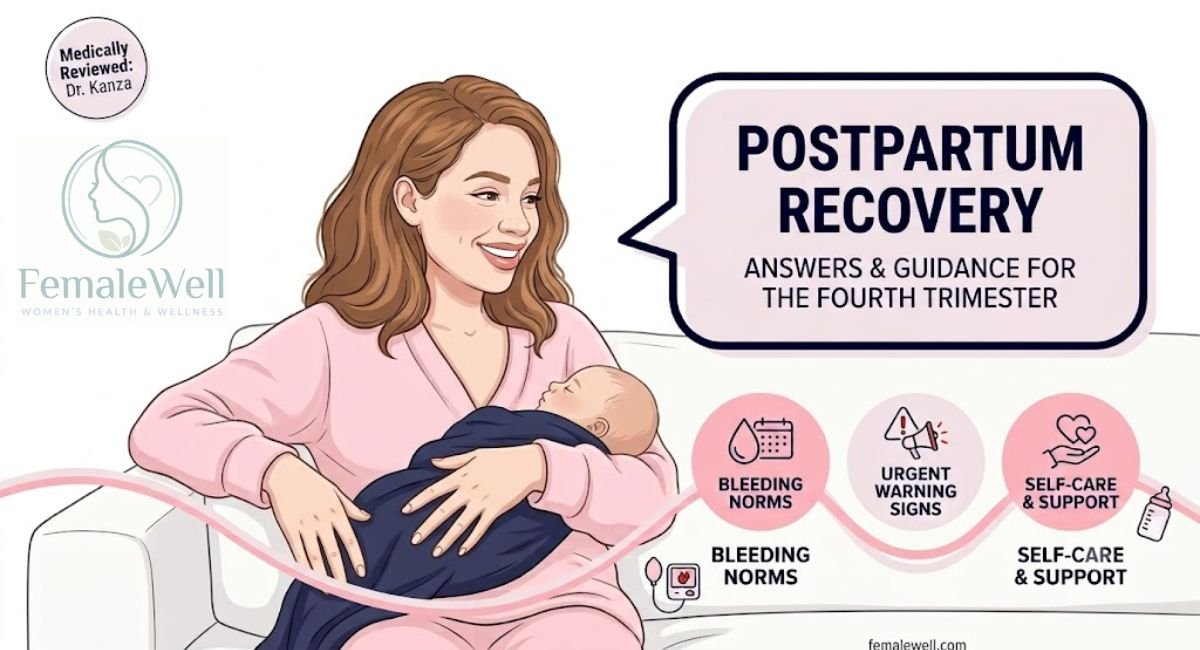

Postpartum Recovery in the 4th Trimester
A Guide to Postpartum Recovery in the Fourth Trimester: What to Expect, When to Worry, and How to Heal
An evidence-based timeline navigating physical healing, emotional changes, warning signs, and practical recovery strategies during your first 12 weeks postpartum.
- Physical Expectations: Week-by-week uterine involution, lochia flow, and perineal/cesarean wound healing.
- Red Flags: Recognizing postpartum hemorrhage, preeclampsia symptoms , and postpartum depression vs. baby blues.
- Healing Protocols: Evidence-backed pelvic floor recovery, nutrition for tissue repair, and safe mobility guidelines.
You have just completed one of the most physically demanding experiences a human body can endure, and now the quiet work of healing after childbirth begins. This A Guide to Postpartum Recovery in the Fourth Trimester: What to Expect, When to Worry, and How to Heal gives you a clear, evidence-based map for navigating postpartum recovery with confidence and safety. You will learn what counts as normal symptoms during postpartum recovery, which urgent maternal warning signs demand immediate action, and how care partners postpartum can protect your well-being.
Every section blends medical facts with practical tips so you can recognize postpartum problems early and act quickly if complications arise. Think of this guide as your companion for the first 12 weeks after birth, a time when your body rebuilds from the inside out while you adjust to life with your newborn. Whether you had a vaginal birth or cesarean, your experience matters and deserves informed, compassionate attention that honors your long-term maternal health.
What Is the Fourth Trimester?
The fourth trimester describes the first 12 weeks after birth, a period when your body shifts from pregnancy to after birth recovery while you adjust to life with a newborn. Medical groups now emphasize this window because many pregnancy-related deaths and serious complications happen during these weeks, not during labor itself. Understanding what is the fourth trimester helps you frame fatigue, mood swings, and body aches as expected parts of postpartum recovery rather than personal failures. This perspective encourages rest, timely postpartum appointments, and faster response to postpartum warning signs.
Research shows that early, consistent postpartum follow-up reduces risks like hemorrhage, infection, and untreated mental health conditions. The fourth trimester concept also validates your need for rest after childbirth, hydration after birth, and nutrition postpartum without guilt. When you treat these weeks as a distinct medical phase, you are more likely to protect long-term health postpartum and avoid delayed postpartum care. You deserve support that honors the intensity of this season and equips you to speak up for postpartum care when something feels off.

What Your Body Is Recovering From
Your body does not reset at delivery; it begins a layered repair process that includes an internal wound where the placenta detached. Whether you had a vaginal birth or cesarean, you are managing uterus healing after birth, placental site healing, and dramatic hormonal changes after delivery. Understanding this process helps you interpret symptoms without panic while staying alert to red flags.
Uterus Contraction & Healing
Your uterus shrinks from watermelon size back to pear size through rhythmic afterpains—often intensifying during breastfeeding. Uterus shrinking after birth triggers postpartum bleeding (lochia) as the placental site scab heals over several weeks. Cramping should gradually ease rather than spike.
Vaginal Birth Recovery
Perineal pain, swelling, or stitches from tearing or an episiotomy usually take 1–2 weeks for surface comfort, though deeper tissue takes longer. Ice packs, sitz baths, and provider-approved pelvic floor exercises support vaginal delivery recovery and prevent long-term complications.
C-Section Incision & Care
A cesarean is major abdominal surgery. C-section recovery involves strict activity limits, managing pulling or numbness around the scar, and using stool softeners and supportive pillows. Nerves regenerate and tissue remodels over several months.
Rapid Hormonal Shifts
Within hours of birth, estrogen and progesterone plummet. These postpartum hormone shifts drive milk production, night sweats, hair shedding, and mood fluctuations. Most people stabilize by 6–12 weeks with adequate rest and support.
Milk Production After Delivery (Regardless of Feeding Plan)
Milk production starts as a hormonal response to placenta delivery—not your feeding plan. You may experience leaking breasts after birth, fullness, or tender breast engorgement postpartum even if formula feeding. Engorgement typically settles within 1–2 weeks using cold packs and supportive, non-restrictive bras.
Normal Symptoms During Postpartum Recovery
Not every ache or tear means trouble; many symptoms are expected parts of postpartum recovery that fade with time. Lochia, cramping, breast fullness, and fatigue form a common cluster as your body recalibrates to non-pregnant function. The key is tracking trends: normal symptoms during postpartum recovery slowly improve, while concerning ones escalate or stall. You deserve reassurance about what’s typical and clarity on what symptoms should not be ignored after birth.

Postpartum Symptoms: When to Call Your Doctor and When to Go to the ER
Some symptoms cross from expected to urgent, and knowing the line can save your life during postpartum recovery. Postpartum warning signs like heavy postpartum bleeding, severe headache, or chest pain postpartum demand quick action, not wait-and-see. This guide breaks down each symptom so you can decide when to call your doctor postpartum or when to go to the ER after giving birth. You are the expert on your body—trust your instincts if something feels off.
Bleeding
Bleeding suddenly increases after slowing, or you pass postpartum clots larger than a golf ball.
Soaking a pad in under an hour for 2 consecutive hours, feeling faint, gushing, or dizziness (signals hemorrhage or retained tissue).
Pain
Incision pain, perineal pain, or postpartum soreness worsens after initial improvement or limits movement.
Severe abdominal pain with fever, vomiting, or fainting (may indicate infection, hematoma, or internal bleeding).
Fever / Infection
Temperature of 100.4°F (38°C)+ with chills, foul discharge, or incision redness needing same-day care.
Fever accompanied by confusion, rapid heart rate, or severe weakness suggesting postpartum sepsis.
Headache / Vision
Persistent postpartum headache unrelieved by rest/medication, or mild vision changes postpartum.
Severe headache with blurred vision, seeing spots postpartum, or confusion (critical postpartum preeclampsia signs).
Breast Symptoms
Localized breast pain, redness, or warmth with low-grade fever suggesting early mastitis symptoms.
Fever spikes, spreading redness, or flu-like exhaustion requiring immediate antibiotics to prevent abscess.
Breathing / Chest
Any chest pain postpartum, chest pressure, trouble breathing, shortness of breath at rest, coughing blood, or rapid heartbeat. Can signal pulmonary embolism postpartum or heart strain.
Leg Symptoms
Bilateral mild leg swelling after birth is common and can be discussed at standard routine follow-ups.
One-sided calf pain, asymmetric swelling, redness, or warmth (indicates potential deep vein thrombosis postpartum).
Mental Health
Postpartum sadness, anxiety, or irritability lasting beyond two weeks or worsening despite rest (postpartum depression signs).
Thoughts of harming yourself or thoughts of harming your baby. Seek immediate, compassionate support without judgment.

Get Emergency Care Right Away If You Have:
Certain symptoms scream “postpartum emergency” and bypass the call-your-doctor step entirely for your safety. If you experience heavy postpartum bleeding, chest pain postpartum, severe headache with vision changes postpartum, seizures postpartum, or signs of a blood clot after pregnancy, head to the ER immediately. Thoughts of harming yourself or thoughts of harming your baby also demand urgent intervention without delay. These urgent maternal warning signs align with CDC and ACOG guidance for life-threatening conditions.
You shouldn’t second-guess these cues or wait to see if they pass during your postpartum recovery journey. Postpartum emergency care saves lives when accessed quickly, especially for hemorrhage, clots, or cardiac issues. Keep emergency numbers visible and ensure your care partners postpartum know these red flags thoroughly. Your safety matters as much as your baby’s and deserves immediate, decisive action.
If Your Baby Is in the NICU: Your Recovery Still Matters
Having your baby in the NICU doesn’t pause your postpartum recovery; it often adds travel stress postpartum and emotional strain that complicates healing. You still need to attend postpartum appointments, take postpartum medications, and monitor your own symptoms closely despite the focus on your baby. NICU and maternal recovery go hand in hand—your health supports your baby’s journey and family stability. Ignoring your own needs can mask warning signs and delay critical care.
Prioritize rest after childbirth between visits, accept meal help, and schedule your own checkups without guilt or hesitation. Baby in NICU mother recovery requires extra vigilance because exhaustion can dull symptom awareness and response time. Advocate for yourself with the care team and lean on family support postpartum networks for practical help. Your well-being is foundational to your family’s resilience and your baby’s long-term outcomes.
Postpartum Health Is a Critical Part of Maternal Care
The weeks after birth aren’t just about baby care; they’re a high-risk window for maternal care complications that demand attention. In the U.S., many pregnancy-related deaths occur postpartum, with stark disparities in maternal care affecting Black women disproportionately. Postpartum health gaps include dismissed concerns, delayed diagnoses, and fragmented follow-up that worsen outcomes. Closing these gaps starts with recognizing symptoms early and advocating fiercely for timely, respectful care.
You deserve care that listens, validates, and acts without minimizing your experience or delaying necessary interventions. Long-term maternal health depends on addressing issues like hypertension, mental health, and pelvic floor dysfunction now. Push for timely postpartum appointments, second opinions if needed, and resources that support your whole recovery journey. Your voice matters in shaping safer maternal warning signs CDC protocols and reducing Black maternal health disparities.
Frequently Asked Questions
You likely have quick questions about postpartum recovery that don’t need a full paragraph to answer thoroughly. This FAQ section tackles common concerns like bleeding duration, cramp norms, and mental health support options. Each answer gives you clear, actionable guidance rooted in current guidelines and clinical experience. Bookmark this for late-night worry moments when you need fast, reliable information.
Lochia typically lasts 4–6 weeks, transitioning from red to pink to yellow-white as placental site healing progresses. Postpartum bleeding should gradually lighten; heavy flow after week 2 needs evaluation for retained tissue or infection.
Call your provider for persistent postpartum headache; go to the ER if vision changes postpartum or confusion appear suddenly. Postpartum headache with severe features can signal postpartum preeclampsia signs needing urgent management.
Yes, exhaustion is expected in the fourth trimester, but extreme tiredness after birth with dizziness or fainting isn’t normal. Rest, hydrate, and seek care if you can’t stay awake or function safely at home.
Ongoing postpartum sadness, anxiety, irritability, or difficulty bonding with baby beyond two weeks warrant professional support. Postpartum depression signs improve with early therapy, medication, or combined approaches tailored to your needs.
Partners can monitor symptoms, handle chores, ensure rest, and attend postpartum appointments with you. Partner support after birth reduces stress, speeds healing, and creates a safer environment for postpartum self-care.
Your Fourth Trimester Journey & Final Takeaways
Takeaway Your A Guide to Postpartum Recovery in the Fourth Trimester journey is unique, but you don’t have to navigate it alone without support. Understanding postpartum recovery norms, urgent maternal warning signs, and postpartum self-care strategies empowers you to heal confidently and safely. Keep this guide handy, lean on your care team, and trust your instincts when something feels wrong during the fourth trimester. You’ve got this—and you deserve compassionate, timely maternal care every step of the way.