
30 Natural Ways to Manage PCOS
30 Natural Ways to Help Manage PCOS: Diet, Supplements, Lifestyle & More
Polycystic Ovary Syndrome doesn’t have to control your daily life. Discover evidence-based, clinical-backed natural remedies to balance hormones, stabilize insulin levels, reduce inflammation, and regain your energy.


Get the PCOS Daily Reset Starter Pack
Download our free 7-Day Anti-Inflammatory Meal Plan & Supplement Tracker PDF.
Join 45,000+ women managing PCOS. Unsubscribe anytime.
Polycystic ovary syndrome, or Polycystic ovary syndrome, can affect your menstrual cycle, metabolism, skin, hair growth and reproductive health. If you have been searching for natural remedies for PCOS, you have probably seen hundreds of promises online. Some are sensible. Others are far less convincing.
The good news is that meaningful PCOS lifestyle changes do not need to involve extreme diets or miracle supplements. Nutrition, regular exercise, sleep, stress management and appropriate medical care can all play useful roles. However, PCOS is a complex condition, so there is no single natural PCOS treatment that works for everyone. The 2023 international guideline emphasizes sustainable lifestyle habits and individualized care rather than one universal diet or exercise prescription.
Important: Natural approaches can support PCOS treatment, but they should not replace appropriate medical evaluation or prescribed treatment. This is especially important when you have persistent irregular periods, fertility concerns, heavy bleeding or significant metabolic risk factors.
1. Start With a PCOS-Friendly Diet
Food is one of the easiest places to begin making practical changes. A balanced PCOS diet does not mean you must eliminate entire food groups. Instead, focus on nutritious PCOS-friendly foods, adequate protein, fiber-rich carbohydrates and unsaturated fats. A Mediterranean-style pattern can be useful because it naturally emphasizes vegetables, legumes, whole grains, fish, olive oil, nuts and minimally processed foods. The broader goal is a sustainable eating pattern that supports metabolic and overall health rather than a rigid diet.
A useful meal can be surprisingly simple. You might combine lentils with vegetables and whole grains or pair fatty fish with roasted vegetables and potatoes. These choices provide different nutrients while making meals satisfying. There is also no strong evidence that every person with PCOS needs a low-carb diet or low-calorie diet. Your eating pattern should reflect your preferences, culture, nutritional needs and health goals.
8 PCOS-Friendly Diet Strategies for Hormonal Balance
A balanced diet can help manage PCOS symptoms by improving insulin sensitivity, reducing inflammation, and stabilizing energy levels.
Choose More Whole Foods
Unprocessed, whole foods provide intact nutrients and fiber that slow digestion, prevent insulin spikes, and promote sustained satiety.
Balance Your Meals
Pairing complex carbohydrates with lean protein and healthy fats prevents rapid glucose absorption, keeping blood sugar stable throughout the day.
Increase Dietary Fiber
Fiber binds to excess hormones in the digestive tract, promotes a healthy gut microbiome, and improves long-term insulin sensitivity.
Include Anti-Inflammatory Foods
Chronic low-grade inflammation drives excess androgen production. Omega-3s and antioxidants soothe cellular stress and support ovarian health.
Pay Attention to Iron
PCOS can involve heavy menstrual bleeding or absent periods (amenorrhea). Tailor iron intake based on lab tests and period blood flow.
Include Magnesium-Rich Foods
Magnesium improves insulin sensitivity, calms the nervous system, decreases menstrual cramps, and supports restorative sleep quality.
Reduce Refined Sugars
Ultra-processed sugars create rapid glucose spikes, worsening insulin resistance and triggering increased androgen production in ovaries.
Understand Caffeine Response
High caffeine can increase cortisol (stress hormone) levels and disrupt sleep. Observe how your body responds to find your optimal threshold.
Focus on Whole, Minimally Processed Foods
Strategy #1: Choose more whole foods: Build your meals around vegetables, fruit, legumes, nuts, seeds, whole grains and other minimally processed foods. Whole foods provide fiber, vitamins, minerals and other compounds that support general metabolic health. Leafy greens, broccoli, berries, lentils and beans can all fit naturally into a balanced PCOS diet without requiring complicated recipes or expensive specialty products.
Balance Carbohydrates With Protein and Healthy Fats
Strategy #2: Balance your meals: Instead of fearing carbohydrates, combine them with protein and healthy fats. For example, you might eat oats with yogurt and nuts or whole-grain toast with eggs and avocado. This approach can make meals more satisfying and may help you avoid the rapid hunger that sometimes follows highly refined meals. It is more flexible than automatically adopting a restrictive diet.
Choose High-Fiber Foods
Strategy #3: Increase dietary fiber: Beans, lentils, vegetables, fruit, seeds and whole grains can increase fiber intake while adding texture and variety. Foods such as spinach, berries, Brussels sprouts, chickpeas and oats can be especially useful choices. Fiber also supports digestive health and can contribute to fullness, which may make long-term weight management easier without relying on extreme restriction.
Why Fiber May Help With Blood Sugar Control
Fiber can influence how quickly food is digested and absorbed, particularly when it replaces highly refined carbohydrates. This matters because blood sugar, insulin sensitivity and insulin resistance are relevant metabolic considerations in PCOS. However, fiber is not a standalone cure for PCOS. Think of it as one useful piece of a broader eating pattern that supports insulin metabolism and overall metabolic health.
Include Anti-Inflammatory Foods
Strategy #4: Include more anti-inflammatory foods: Vegetables, fruit, legumes, nuts, seeds, fish and olive oil can form the foundation of an eating pattern rich in beneficial nutrients. Some people use the term “anti-inflammatory diet” as though it were a specific medical treatment. It is better understood as a general dietary pattern that may support overall health rather than a guaranteed way to correct inflammation or oxidative stress associated with PCOS.
Add Iron-Rich Foods When Needed
Strategy #5: Pay attention to iron when appropriate: Iron-rich foods include meat, seafood, beans, lentils, fortified grains and leafy greens. This nutrient deserves particular attention if you experience heavy menstrual bleeding because ongoing blood loss can contribute to deficiency. However, do not automatically start an iron supplement based on symptoms alone. A clinician can assess your history and laboratory results before recommending supplementation.
Get Enough Magnesium From Food
Strategy #6: Include magnesium-rich foods: Nuts, seeds, legumes, whole grains and leafy greens can provide magnesium as part of a balanced diet. Almonds, cashews, pumpkin seeds and beans are practical options. Magnesium has important roles throughout the body, but eating magnesium-rich foods should not be confused with evidence that high-dose magnesium supplements specifically treat PCOS. Food first is usually a sensible starting point.
Limit Added Sugar and Highly Refined Carbohydrates
Strategy #7: Reduce frequent intake of added sugars and highly refined foods: Sugary drinks, sweets and heavily refined snacks can make it harder to maintain a nutrient-dense eating pattern. You do not need to ban every dessert. Instead, consider frequency, portion size and what you eat most often. Replacing some refined foods with whole grains, legumes, vegetables and fruit can support a more balanced approach to blood sugar management.
Consider Your Caffeine Intake
Strategy #8: Understand your response to caffeine: Coffee and green tea can fit into many healthy eating patterns, but caffeine can affect sleep, anxiety, heart rate and individual well-being. There is not strong evidence that every person with PCOS needs to eliminate caffeine. Instead, consider how much you consume and whether it contributes to sleep disturbances, stress or other symptoms.
Does Coffee Affect PCOS Symptoms?
Claims that coffee automatically worsens PCOS are stronger than the evidence supports. Your response may depend on quantity, timing and individual tolerance. If coffee makes you restless or interferes with sleep hygiene, reducing it may be worthwhile. If you tolerate moderate caffeine well, there is no established rule requiring universal coffee avoidance simply because you have PCOS.
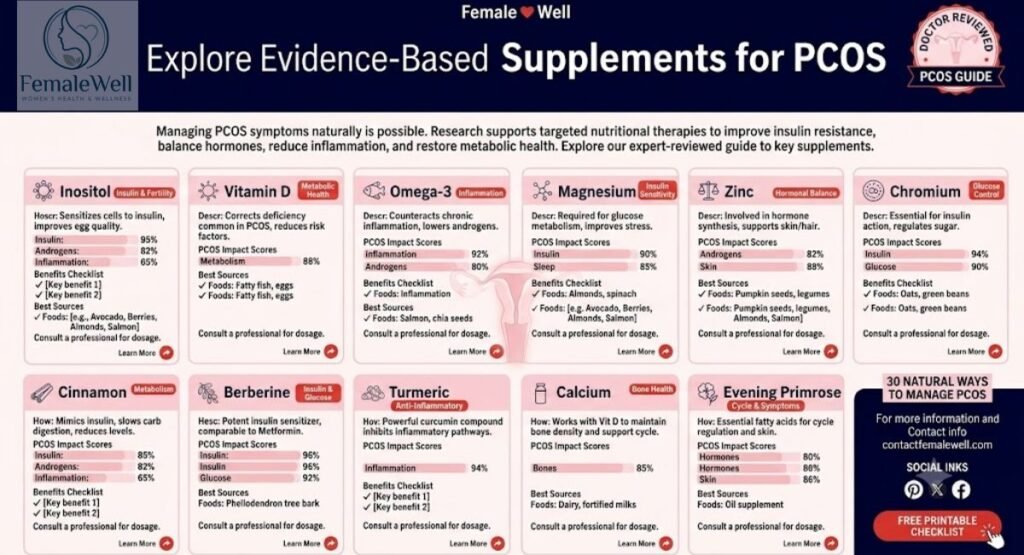
2. Explore Evidence-Based Supplements for PCOS
Supplements receive enormous attention in the PCOS world, but popularity is not the same as proof. Dietary supplements can contain vitamins, minerals, botanicals or other ingredients, and the evidence varies substantially between products. Research findings can also differ because studies use different formulations, doses and populations. For that reason, supplements should be viewed as possible additions to care rather than automatic natural remedies for PCOS. This distinction is particularly important when a supplement affects glucose, blood pressure or hormone levels. A product may be “natural” yet still produce pharmacological effects or interact with medicines. Before taking several products together, review the ingredients with a healthcare professional. This becomes especially important if you are pregnant, trying to conceive, breastfeeding or taking prescription medication.
Inositol
Strategy #9: Discuss inositol rather than assuming you need it. Inositol is one of the most studied supplements in PCOS and has attracted interest because of its possible relationship with insulin signaling and ovarian function. However, evidence does not justify presenting it as a guaranteed treatment. The international guideline describes the evidence around inositol for infertility outcomes as limited and uncertain.
Myo-Inositol and D-Chiro-Inositol
Myo-inositol and D-chiro-inositol are two forms commonly found in PCOS supplements. Many commercial products emphasize particular combinations or ratios. That marketing should not be mistaken for proof that one formulation is universally appropriate. Product quality, dose, treatment goal and individual circumstances all matter. Your clinician can help determine whether supplementation has a reasonable place in your personal care plan.
What Does the Research Say?
Current evidence does not support describing inositol as a proven fertility treatment for every person with PCOS. The international guideline states that benefits and risks remain too uncertain to recommend inositol as a fertility therapy and notes limited evidence for outcomes such as ovulation, clinical pregnancy and live birth.
Vitamin D
Vitamin D is essential for bone health and several physiological processes. Some people with PCOS also have low vitamin D levels, but that does not mean high-dose supplementation automatically improves PCOS outcomes. If deficiency is suspected or identified, testing and appropriate supplementation can be discussed with a healthcare professional. Avoid taking very high doses simply because a supplement is marketed for hormone balance.
Omega-3 Fatty Acids
Omega-3 fatty acids occur naturally in foods such as salmon, sardines and other fatty fish. They can also be obtained from certain supplements. Omega-3s are relevant to general cardiovascular and nutritional health, which matters because PCOS can occur alongside metabolic risk factors. However, an omega-3 supplement should not be presented as a replacement for diet, exercise or appropriate medical PCOS treatment.
Magnesium
Magnesium supplements may be useful when dietary intake is inadequate or a healthcare professional identifies a specific reason for supplementation. However, taking more is not necessarily better. Excess supplemental magnesium can cause gastrointestinal symptoms and may be inappropriate for some people. Food sources such as nuts, seeds, legumes and leafy greens remain practical ways to increase intake.
Zinc
Zinc is involved in immune function, cell processes and normal metabolism. It is sometimes included in PCOS supplements because of interest in acne, inflammation and androgen levels. However, evidence for zinc as a specific PCOS treatment remains limited. Excessive zinc can also interfere with copper status and cause other problems, so long-term high-dose use deserves professional guidance.
Chromium
Chromium has been studied because of its potential relationship with glucose metabolism and insulin sensitivity. Some research has suggested possible metabolic effects, but evidence is not strong enough to treat chromium as a standard PCOS therapy. If you are already taking medication that affects blood sugar, discuss chromium with your clinician before adding it.
Cinnamon
Cinnamon is a common food ingredient and has also been investigated in concentrated supplement form. Researchers have explored whether it might influence glucose regulation and some PCOS-related outcomes. Culinary use is very different from taking a high-dose extract. Concentrated products may have different safety considerations, so do not assume that more cinnamon means better results.
Berberine
Berberine has attracted considerable attention because of research involving glucose regulation, lipid metabolism and insulin resistance. However, evidence is mixed and much of the research concerns metabolic diseases rather than PCOS specifically. NCCIH notes gastrointestinal side effects and possible drug interactions and advises against berberine during pregnancy and breastfeeding because of potential risks.
Turmeric and Curcumin
Turmeric contains compounds including curcumin that have been studied for their biological and anti-inflammatory properties. Adding turmeric to food can be a simple culinary choice, but concentrated curcumin supplements are different. Their absorption, dose and formulation vary considerably. Evidence does not justify promising turmeric as a standalone treatment for PCOS hormone imbalance or fertility problems.
Calcium
Calcium is important for bones, muscles and normal physiological function. Most people should first consider whether their diet provides adequate calcium through foods such as dairy products or fortified alternatives. A supplement may be appropriate in certain circumstances, but unnecessary high intake is not automatically beneficial for PCOS. Your nutritional needs should guide supplementation.
Evening Primrose Oil
Evening primrose oil is often marketed for women’s hormonal health, but evidence for meaningful PCOS-specific benefits is limited. It should therefore remain a cautious consideration rather than a central part of natural PCOS treatment. If you are taking medication or preparing for pregnancy, discuss its use with a healthcare professional before starting it.
What to Know Before Taking Supplements
Strategy #10: Evaluate the product before taking it. Look at the ingredients, dose, intended purpose, evidence and possible interactions. Two bottles with similar labels may contain very different formulations. NCCIH notes that supplements sold to consumers can differ from products used in research and that evidence varies widely between ingredients.
Possible Drug Interactions and Side Effects
Supplements can cause side effects or interact with medicines. This includes products that affect glucose, blood pressure, clotting or hormone levels. Contamination and inaccurate labeling are additional concerns. These risks become more important when several dietary supplements are combined. Tell your healthcare providers about every supplement you use rather than assuming they are irrelevant to your medical record.
3. Consider Herbal and Complementary Approaches
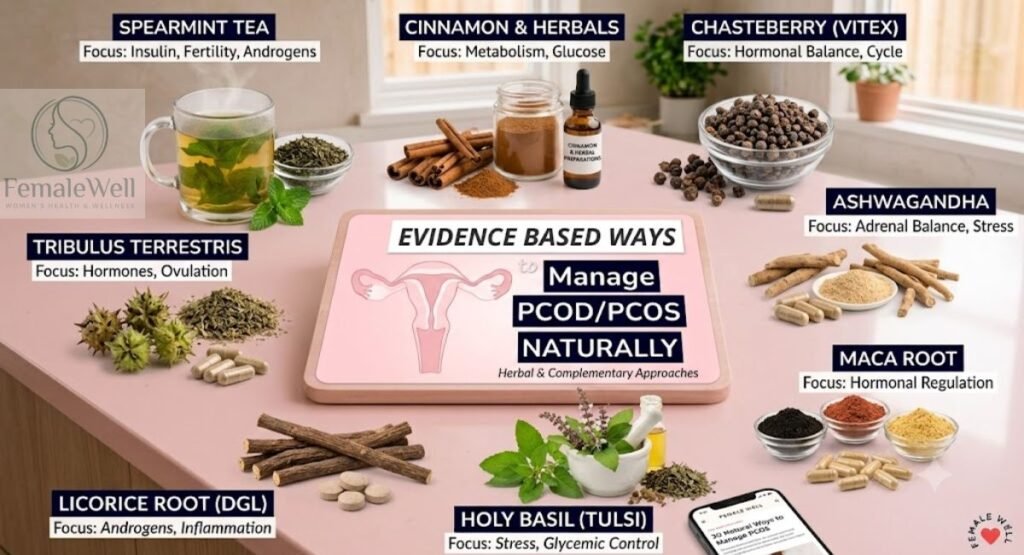
Herbal products occupy a complicated space in alternative PCOS therapies. Some have traditional histories and small clinical studies, while others have little meaningful evidence in PCOS. This does not mean every herb is useless. It means you should separate traditional use, laboratory research and human clinical evidence. Those three things are not interchangeable.
A particularly important issue is safety. Herbal supplements can affect medication metabolism, blood pressure, glucose or other biological pathways. NCCIH emphasizes that safety information varies considerably and that manufacturers do not have to establish the same evidence of effectiveness required for approved drugs before dietary supplements reach consumers.
Spearmint Tea
Strategy #11: Consider spearmint tea as a modest complementary option. Small studies have investigated spearmint in relation to androgen-related symptoms, but the evidence is not strong enough to treat it as a replacement for established care. If you enjoy the tea and tolerate it well, it can be part of a healthy routine. Keep expectations realistic rather than expecting dramatic changes in androgen activity.
Cinnamon and Herbal Preparations
Cinnamon can be used as a food or concentrated supplement. Food-level use is generally straightforward, while herbal preparations may deliver substantially larger amounts. Because concentrated products differ in formulation, their effects and risks may also differ. The same principle applies to many adaptogen herbs and botanical blends marketed for hormone regulation.
Chasteberry
Chasteberry has a long history of traditional use for menstrual and reproductive concerns. However, traditional use does not establish that it effectively treats PCOS. If you are considering it for cycle symptoms or fertility, discuss the product with a healthcare professional. This is especially important when other hormone-related medicines are involved.
Ashwagandha
Ashwagandha is often marketed for stress, sleep and hormonal wellness. NCCIH reports that evidence is clearer for some short-term stress and insomnia outcomes than for female fertility or other conditions. Safety also matters because reported concerns include gastrointestinal effects, rare liver injury and interactions with several medicines. It should be avoided during pregnancy and breastfeeding.
Maca Root
Maca root is frequently promoted for energy, libido and reproductive wellness. Yet evidence for treating PCOS itself remains limited. Marketing claims can easily outrun clinical research. If you are considering maca for fertility or ovulation, treat it as an unproven complementary option rather than assuming it can correct an underlying PCOS hormone imbalance.
Holy Basil
Holy basil, also known as tulsi, is traditionally used in several wellness systems. Modern interest includes stress and metabolic health. However, evidence specifically supporting holy basil as a PCOS therapy is not robust. If you choose an herbal product, consider the complete formulation rather than focusing only on one attractive ingredient printed on the front of the bottle.
Licorice Root
Licorice root deserves particular caution. It contains glycyrrhizin, which can produce important effects on blood pressure, potassium and cardiovascular function when consumed in significant amounts. NCCIH reports potentially serious adverse effects with excessive or prolonged intake. People with hypertension, heart or kidney problems need particular caution.
Tribulus Terrestris
Tribulus terrestris is another botanical frequently included in discussions about reproductive health and PCOS. Human evidence remains limited and does not establish it as a reliable treatment. If a supplement promises to “balance hormones” or restore fertility quickly, examine the claim carefully. Strong language in advertising is not a substitute for strong clinical evidence.
Why “Natural” Does Not Always Mean Safe
Strategy #12: Treat natural products with the same seriousness as other active substances. Herbs can contain biologically active compounds that affect the body. They can also interact with medicines or cause adverse effects. NCCIH specifically warns that “natural” does not necessarily mean safe and recommends discussing complementary products with healthcare professionals.
Quality and Dosage Matter
The dose used in a study may not match the amount found in a commercial product. Extracts, teas, capsules and combination formulas can have different concentrations. Some products also contain multiple ingredients, making it difficult to know which component causes an effect. Look for transparent labeling and appropriate quality controls rather than relying solely on impressive marketing terms.
When to Avoid Herbal Supplements
Extra caution is appropriate during pregnancy, breastfeeding, before surgery or when taking prescription medicines. The same applies when you have liver, kidney, thyroid, cardiovascular or other significant health conditions. For example, NCCIH warns about several important safety issues involving ashwagandha, berberine and licorice root.
4. Move Your Body in a Way You Can Maintain
Physical activity is one of the most practical PCOS lifestyle changes because it can support metabolic health, fitness, mood and quality of life. Importantly, the goal does not have to be rapid weight loss. The international guideline recommends sustainable physical activity according to individual preferences and emphasizes that no single exercise type is universally superior for PCOS.
That flexibility matters. You do not need a perfect gym routine to benefit from movement. Walking, resistance exercise, cycling, swimming, yoga, Pilates and other activities can all have a place. The best routine is usually one you can continue when work becomes busy, motivation dips or life gets messy.

Combine Aerobic Exercise With Strength Training
Strategy #13: Combine aerobic activity with muscle strengthening. Aerobic exercise can improve cardiovascular fitness while resistance work challenges muscles and supports physical function. You might combine brisk walking with bodyweight exercises or cycling with resistance bands. The objective is not to create an exhausting routine. It is to develop a balanced pattern of regular exercise that fits your life.
Try Resistance Training for Metabolic Health
Strategy #14: Include resistance training. Weight machines, resistance bands, free weights and bodyweight exercises can all strengthen muscles. Building strength can also make everyday activities easier. Start with manageable loads and gradually increase difficulty. You do not need advanced bodybuilding techniques to make resistance exercise a useful part of your PCOS treatment plan.
Walking Can Be a Simple Starting Point
Strategy #15: Walk more often. Walking is accessible, inexpensive and easy to scale. A short walk after meals or regular movement breaks during sedentary work can increase your overall activity. You can start with a comfortable pace and build gradually. If you currently exercise very little, consistency is more valuable than trying to imitate an extreme online fitness program.
Consider Yoga, Pilates, or Low-Impact Exercise
Strategy #16: Choose movement you enjoy. Yoga, Pilates and swimming can provide physical activity without requiring high-impact training. Aerobics can also work if you enjoy group exercise. The right activity depends on your fitness level, preferences and physical limitations. Enjoyment matters because a routine you willingly repeat is more useful than a theoretically perfect program you quickly abandon.
Avoid Overtraining and Extreme Exercise
More exercise is not automatically better. Very demanding routines can become difficult to recover from, particularly when combined with inadequate nutrition or poor sleep. High-intensity interval training and long-distance running can be appropriate for some people, but they are not requirements for PCOS. Your program should challenge you without becoming an unsustainable source of physical or psychological stress.
How Often Should You Exercise With PCOS?
For adults, the international PCOS guideline aligns with general activity recommendations that include around 150–300 minutes of moderate-intensity activity or 75–150 minutes of vigorous activity each week, alongside muscle-strengthening activity on at least two non-consecutive days. Your starting point can be lower if needed. Progress gradually rather than treating the target as an all-or-nothing rule.
Make Movement Part of Your Daily Routine
Strategy #17: Reduce prolonged sitting. Take short movement breaks, walk while making phone calls, use stairs when practical or add brief activity between tasks. These small changes may seem insignificant individually, but they can accumulate. Think of daily movement as a background habit rather than something that only happens when you put on workout clothes.
5. Support a Healthy Weight and Metabolic Health
PCOS and metabolism are closely connected, but weight should never become the only measure of health. Insulin resistance, glucose abnormalities, blood pressure and lipid changes can occur alongside PCOS. The international guideline states that people with PCOS have increased risks of impaired glucose regulation and type 2 diabetes regardless of age or BMI. (ASRM)
A healthy weight can be an appropriate goal for some people, but health exists across a range of body sizes. Sustainable nutrition, movement, sleep and metabolic monitoring can be valuable regardless of whether the scale changes dramatically. A compassionate approach is often more productive than repeated cycles of restriction and regain.
Understand the Connection Between PCOS and Insulin Resistance
Insulin resistance means the body’s cells respond less effectively to insulin, which can contribute to changes in insulin metabolism and glucose regulation. PCOS is not simply an insulin disorder, however. Hormonal, reproductive and metabolic pathways interact in complicated ways. Understanding this connection can help you make informed choices without reducing every PCOS symptom to blood sugar alone.
Focus on Sustainable Habits Rather Than Crash Diets
Strategy #18: Avoid crash diets. A very restrictive low-calorie diet may produce short-term weight changes, but it can be difficult to maintain and may create an unhealthy relationship with food. A sustainable eating pattern is usually more practical. Focus on meals you can repeat, enjoyable foods and gradual improvements rather than dramatic promises about rapid weight management.
Set Realistic, Individualized Health Goals
Your goals might involve more predictable periods, better fitness, improved sleep, healthier metabolic markers or support for fertility. Weight loss may be relevant for some people, but it does not need to define every treatment goal. A personalized plan also allows you to account for age, medications, pregnancy plans, cultural foods, physical ability and your current level of activity.
Why Weight Is Not the Only Measure of PCOS Health
The scale cannot measure everything that matters. Menstrual cycle patterns, blood pressure, glucose status, cholesterol, physical fitness, acne, excess hair growth, sleep and emotional well-being can all provide useful information. Someone may improve metabolic health without dramatic weight change. That is why PCOS management should consider the whole person rather than turning one measurement into the entire story.
PCOS Can Affect People at Different Body Sizes
PCOS is not restricted to people with obesity or a higher body weight. People with different body sizes can experience PCOS symptoms, including menstrual irregularity, androgen-related symptoms and metabolic abnormalities. Weight stigma can also discourage people from seeking care. A respectful approach focuses on symptoms, risks and individual health needs rather than making assumptions based solely on appearance.
Monitor Blood Sugar, Cholesterol, and Other Metabolic Risk Factors
Strategy #19: Monitor metabolic health. The international guideline recommends assessing glycemic status at PCOS diagnosis because the condition is associated with increased risk of impaired glucose tolerance and type 2 diabetes. Cardiovascular risk factors also deserve attention. Depending on your situation, your clinician may assess glucose, lipids, blood pressure and other relevant markers over time.
6. Improve Sleep and Manage Stress
Sleep and stress are easy to overlook when discussing natural PCOS treatment, yet they influence everyday behavior, energy and quality of life. Poor sleep can make exercise harder and may affect food choices and emotional well-being. Meanwhile, ongoing stress can make it difficult to maintain routines. Improving these areas does not “reset” your hormones overnight, but it can strengthen the foundation of long-term self-care.
Your goal is not perfect relaxation. Instead, create a realistic system that helps you recover. Consistent sleep, calming evening habits, enjoyable movement and practical stress management can become part of your broader approach to hormone balance and well-being. If symptoms suggest a sleep disorder, however, lifestyle measures alone may not be enough.
Build Better Sleep Habits
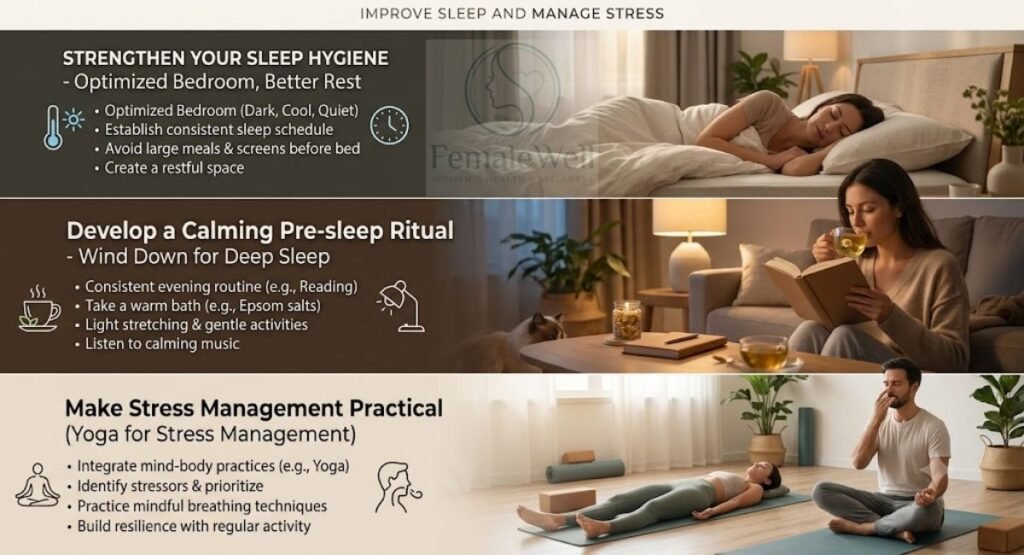
Strategy #20: Strengthen your sleep hygiene. Aim for a regular sleep schedule and create an environment that supports rest. Keep your bedroom comfortable and reduce activities that make it difficult to wind down. Good sleep habits are not glamorous, but they are often easier to maintain than complicated wellness routines that promise dramatic hormonal changes.
Keep a Consistent Sleep Schedule
Going to bed and waking at roughly consistent times can provide structure for your sleep pattern. Your exact schedule depends on work, family responsibilities and personal needs. The important point is regularity. If your sleep varies dramatically between weekdays and weekends, gradually moving toward greater consistency may be more realistic than trying to change everything in one night.
Create a Relaxing Bedtime Routine
Strategy #21: Develop a calming pre-sleep ritual. Dim bright lights, reduce stimulating activities and choose quiet habits such as reading or gentle stretching. If screens keep you mentally engaged, create a period without them before bed. These steps are simple forms of self-care and relaxation, not magical PCOS treatments. Their value comes from supporting healthier sleep behavior.
Screen for Sleep Problems When Necessary
PCOS is associated with an increased risk of obstructive sleep apnea, particularly when other risk factors are present. Persistent loud snoring, witnessed breathing pauses, morning headaches or excessive daytime sleepiness deserve medical attention. If you have ongoing sleep disturbances, do not assume they are simply caused by stress. Identifying a genuine sleep disorder can be an important part of comprehensive care.
Practice Stress-Management Techniques
Strategy #22: Make stress management practical. A short walk, conversation with someone you trust, breathing practice, enjoyable hobby or regular downtime may help. Stress does not have one universal cause or solution. Rather than chasing a perfect cortisol levels routine, identify activities that genuinely help you recover and that you can repeat during demanding periods.
Try Mindfulness, Meditation, or Breathing Exercises
Mindfulness and breathing exercises can provide simple ways to create a pause during stressful moments. They may help some people feel calmer, although they should not be promoted as direct cures for PCOS hormone imbalance. The benefit is often behavioral and psychological: when you feel more regulated, maintaining healthy routines can become easier.
Consider Yoga for Stress and Well-Being
Yoga combines movement, balance and relaxation practices. It can therefore fit naturally into a lifestyle plan that addresses both physical activity and stress. The goal should be improved well-being rather than the promise that yoga will normalize every hormone. If you enjoy it, yoga can become one component of sustainable PCOS lifestyle changes.
Understand the PCOS–Stress–Sleep Connection
PCOS symptoms can create stress, while stress and poor sleep can make healthy routines harder to maintain. This can become a frustrating cycle. You might sleep poorly because you feel anxious about symptoms, then struggle with energy the following day. Breaking the cycle does not require perfection. Small improvements in sleep, movement, nutrition and stress management can reinforce one another.
7. Consider Environmental and Complementary Therapies
Some approaches to PCOS focus on environmental exposures or complementary medicine. These areas are interesting but require careful interpretation. Research into endocrine disruptors, the gut microbiome and complementary therapies continues to evolve. Association does not automatically mean causation, and reducing an exposure where practical is different from claiming that exposure caused your PCOS.
This section is therefore about sensible risk reduction rather than fear. You do not need to turn your home into a laboratory or eliminate every chemical mentioned online. Similarly, acupuncture, probiotics and microbiome products should not be presented as proven replacements for established care. The evidence should determine how confidently each approach is described.
Reduce Exposure to Potential Endocrine Disruptors
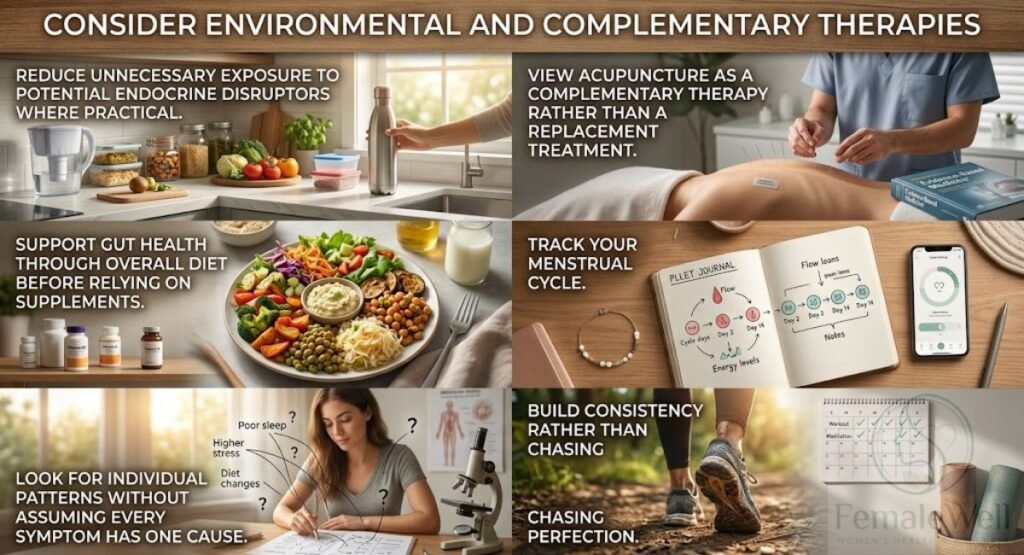
Strategy #23: Reduce unnecessary exposure to potential endocrine disruptors where practical. Researchers have investigated substances such as BPA, phthalates, certain pesticides and other chemicals because of their possible effects on the endocrine system. However, everyday exposure does not prove that a person will develop PCOS. Reasonable exposure reduction can be considered without adopting extreme avoidance behaviors.
Common Sources of Endocrine-Disrupting Chemicals
Potential sources discussed in environmental health research include some plastics, food packaging, cosmetics and household products. Examples may include BPA, phthalates, dioxins, certain pesticides and some glycol ethers. The presence of a chemical in a product does not automatically indicate dangerous exposure. Risk depends on factors such as dose, duration and route of exposure.
Practical Ways to Reduce Everyday Exposure
If you want to reduce exposure, focus on practical habits rather than perfection. Follow food-storage guidance, avoid heating food in containers not designed for that purpose and wash produce appropriately. Consider reducing unnecessary use of strongly fragranced products if that fits your preferences. These steps may reduce certain exposures without creating anxiety around ordinary daily life.
What Does Acupuncture Have to Do With PCOS?
Strategy #24: View acupuncture as a complementary therapy rather than a replacement treatment. Acupuncture has been studied in PCOS for outcomes including menstrual patterns, metabolic measures and reproductive function. Research findings are not strong enough to present acupuncture as a universal PCOS therapy. If you use it, choose a qualified practitioner and continue appropriate medical monitoring.
Consider Probiotics and Gut Health
Strategy #25: Support gut health through overall diet before relying on supplements. Foods such as kombucha, kimchi, yogurt and other fermented foods can fit into a varied eating pattern when tolerated. Probiotics are also available as supplements, but different strains can have different effects. A product that helps one condition cannot automatically be assumed to treat PCOS.
The Gut Microbiome and PCOS
Researchers are investigating relationships between the gut microbiome, metabolism, inflammation and reproductive health. This has created considerable interest in the possibility that gut bacteria could influence aspects of PCOS. However, microbiome research is still developing. It would be premature to claim that changing your gut bacteria can reliably correct hormone regulation, insulin resistance or ovulation.
What the Evidence Actually Shows
The evidence around probiotics and PCOS remains variable because studies use different strains, doses, diets and populations. Some research reports potentially beneficial metabolic or inflammatory effects, but that does not establish a single probiotic as standard PCOS treatment. For now, a diverse nutrient-rich diet is a more established foundation than relying on one commercial microbiome product.
Track Your Menstrual Cycle and Symptoms
Strategy #26: Track your menstrual cycle. Record period dates, bleeding patterns, acne, hair growth, pain, sleep and other symptoms. Tracking can help you notice changes and provide useful information during medical appointments. It can also make fertility planning more informed because changes in cycle patterns may provide clues about ovulation, although tracking alone cannot confirm ovulation.
Identify Your Personal PCOS Triggers
Strategy #27: Look for individual patterns without assuming every symptom has one cause. You may notice that poor sleep, stress, certain foods or disrupted routines coincide with changes in symptoms. Tracking can help you discuss these observations with a professional. Avoid unnecessarily eliminating foods based on online claims unless there is a clear medical or personal reason.
Build a Consistent Daily Routine
Strategy #28: Build consistency rather than chasing perfection. A practical routine might include regular meals, movement, adequate sleep, symptom tracking and planned healthcare appointments. Consistency helps turn individual healthy behaviors into habits. You do not need to follow a flawless wellness schedule every day. A routine that survives busy weeks is usually more useful than an ideal routine that lasts five days.
8. Know When Natural PCOS Management Is Not Enough
Natural strategies can be valuable, but PCOS is a long-term endocrine and reproductive condition that sometimes requires medical treatment. A healthy lifestyle cannot replace evaluation when symptoms are severe or persistent. Irregular periods, fertility problems, heavy bleeding and significant metabolic abnormalities all deserve appropriate attention.
The key is not choosing between natural care and medical care. Good management can include both. Nutrition, exercise, sleep and stress management may sit alongside medication, fertility treatment or other interventions when clinically appropriate. The international guideline emphasizes individualized care and ongoing assessment because PCOS affects different people in different ways.
Talk With Your Doctor Before Starting Supplements
Strategy #29: Discuss supplements before using them. This is especially important when taking several products at once. Tell your clinician about inositol, vitamins, minerals, herbs and combination formulas. Mention pregnancy plans and prescription medicines. A professional can help you distinguish a reasonable nutritional supplement from a product with uncertain benefits or unnecessary risks.
When Irregular Periods Need Medical Evaluation
Persistent irregular periods should not simply be accepted as an unavoidable part of PCOS. Long gaps between periods can have implications for the uterine lining. Your clinician can determine whether treatment is needed to regulate bleeding or protect the endometrium. Do not rely solely on teas, supplements or lifestyle changes when menstrual irregularity is persistent.
When to Seek Help for Fertility Problems
If pregnancy is your goal and conception is taking longer than expected, professional assessment can be valuable. PCOS can interfere with regular ovulation, but effective fertility treatments are available. PCOS fertility support may include lifestyle measures, ovulation-inducing medicines and other approaches depending on your circumstances. Natural approaches should not delay appropriate fertility evaluation when it is needed.
Don’t Ignore Heavy or Unusual Bleeding
Very heavy, prolonged or unusual bleeding deserves medical evaluation. Do not assume that severe bleeding is simply another PCOS symptom. Depending on the cause, significant blood loss can contribute to iron deficiency or anemia. Urgent symptoms such as severe bleeding accompanied by dizziness, fainting or significant weakness require prompt medical attention.
Managing Excess Hair Growth and Acne
Excess facial or body hair and acne can be emotionally difficult as well as physically noticeable. These symptoms can be associated with elevated androgen levels or increased sensitivity to male sex hormones. Lifestyle changes may support general health but may not fully address these symptoms. Dermatological and hormonal treatments can provide additional options when appropriate.
Why PCOS Should Be Monitored Long Term
PCOS deserves long-term attention because its effects can extend beyond reproductive symptoms. The condition is associated with increased risks involving glucose regulation, cardiovascular risk factors and endometrial health. Regular monitoring allows problems to be identified earlier and gives you a chance to adjust your care plan as your needs change.
Blood Sugar and Diabetes Risk
People with PCOS have increased risks of impaired fasting glucose, impaired glucose tolerance and type 2 diabetes regardless of age or BMI. The international guideline recommends assessing glycemic status at diagnosis. Your clinician can determine which test and follow-up schedule is appropriate for you.
Cholesterol and Cardiovascular Health
PCOS management should also consider cardiovascular risk factors. Blood pressure, lipid levels, glucose status, physical activity, smoking status and other factors may contribute to overall risk. A healthy lifestyle can support cardiovascular health, but monitoring remains important. You should not assume that feeling well means metabolic markers are automatically normal.
Endometrial Health
Long-standing untreated absence of menstrual bleeding can increase the risk of endometrial hyperplasia in people with PCOS. The international guideline notes that premenopausal people with PCOS have a substantially higher risk of endometrial hyperplasia and endometrial cancer, although the overall absolute risk of endometrial cancer remains low. Cycle regulation and appropriate progestin or other medical management may sometimes be necessary.
Natural Approaches Should Complement, Not Replace, Medical Care
Natural approaches can form an important part of a broader management strategy, but they should complement rather than replace appropriate PCOS treatment. Be cautious about anyone promising a guaranteed cure through herbs, supplements, systemic enzyme therapies or one restrictive diet. PCOS is complex, and effective care should reflect your symptoms, reproductive goals, metabolic health and personal preferences.
Questions to Ask Your Doctor About PCOS
Strategy #30: Become an active participant in your care. Ask which symptoms require evaluation, whether your blood sugar and cholesterol need monitoring, whether your menstrual pattern needs treatment and which supplements are appropriate. If fertility is a priority, ask how ovulation can be assessed and what evidence-based options are available. Good questions can turn a confusing diagnosis into a clearer long-term plan.
Natural PCOS Management: What Matters Most?
There is no single magic ingredient hiding at the bottom of a supplement bottle. The most useful approach is usually a combination of sustainable habits, appropriate monitoring and individualized medical care. A balanced PCOS diet, regular exercise, adequate sleep and practical stress management can provide a strong foundation.
Supplements and herbal supplements may deserve discussion in selected situations, but their evidence varies considerably. Products such as inositol, berberine, vitamin D, omega-3 fatty acids, cinnamon and various herbs should not all be placed in the same evidence category. Some have more research than others, while several popular remedies remain uncertain.
PCOS Management Approaches Compared
Explore evidence-based lifestyle changes, dietary strategies, and supplements for managing PCOS symptoms.
| Approach | Main Reason People Consider It | Evidence Perspective |
|---|---|---|
|
Balanced Eating Pattern
Lifestyle
|
Metabolic and overall health | Strong Foundation Lifestyle management base |
|
Regular Physical Activity
Lifestyle
|
Fitness and metabolic health | Strong Foundation Lifestyle management base |
|
Weight Management
(when appropriate)
Lifestyle
|
Metabolic and reproductive health | Individualized Tailored to individual goals |
|
Sleep Improvement
Lifestyle
|
Well-being and symptom management | Supportive Important supportive strategy |
|
Stress Management
Lifestyle
|
Quality of life and healthy routines | Supportive Useful supportive strategy |
|
Inositol
Supplement
|
Insulin signaling and reproductive outcomes | Inconsistent Evidence remains uncertain for several outcomes |
|
Vitamin D
Supplement
|
Correcting deficiency | Targeted Appropriate when deficiency exists |
|
Omega-3 Fatty Acids
Supplement
|
General nutritional and cardiovascular health | Variable PCOS-specific effects vary |
|
Berberine
Supplement
|
Glucose and metabolic effects | Promising Safety and evidence limitations matter |
|
Probiotics
Supplement
|
Gut and metabolic health | Developing Research is still developing |
|
Herbal Products
Herbal
|
Various traditional or marketed benefits | Variable Evidence varies widely |
|
Acupuncture
Therapy
|
Complementary symptom management | Mixed Evidence remains mixed |
The most important takeaway is simple: natural does not mean automatically effective and medical does not mean incompatible with healthy lifestyle care. You can eat nourishing foods, move your body, improve sleep and manage stress while also receiving appropriate medical treatment. That balanced approach gives you more tools without forcing you to choose between wellness and evidence-based healthcare. If you are living with Polycystic ovary syndrome, start with changes you can realistically maintain. One nutritious meal is better than an unsustainable diet. One walk is better than an abandoned workout plan. One useful conversation with your clinician can be more valuable than a cupboard full of unproven supplements. Over time, these small decisions can become a practical and personalized strategy for managing PCOS.