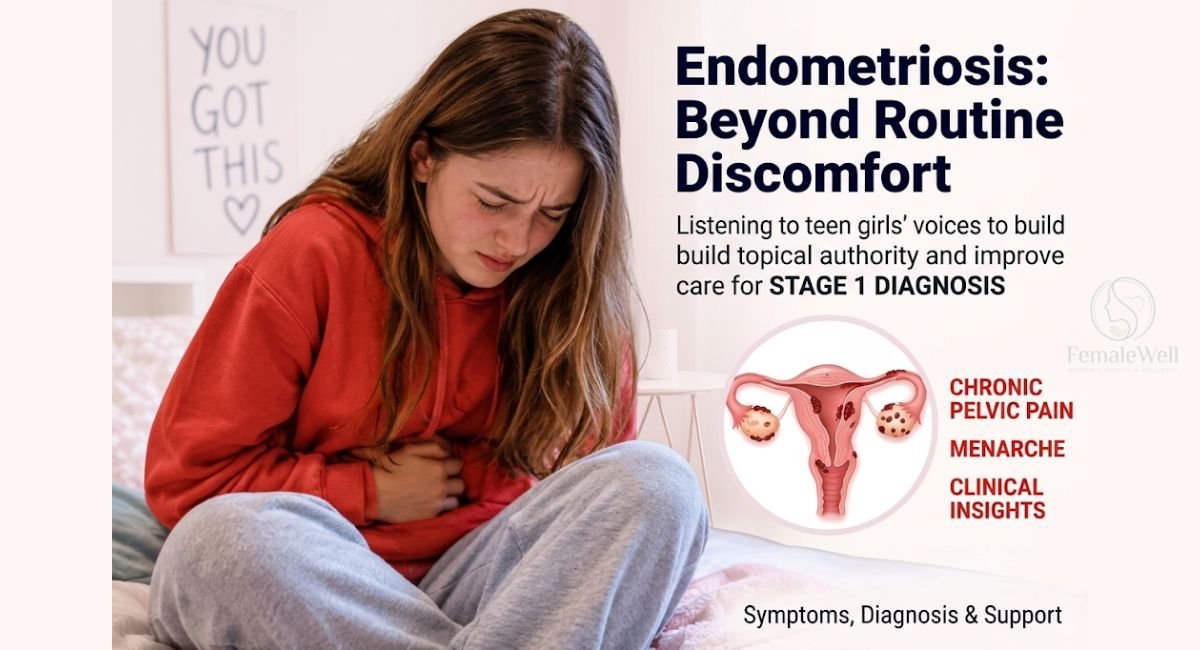

Endometriosis in Teens: Symptoms & Stage 1 Diagnosis
ENDOMETRIOSIS from a Teen Girl’s Perspective: SYMPTOMS, STAGE 1 DIAGNOSIS and the FIGHT TO BE HEARD
ENDOMETRIOSIS is often associated with adult women, but this painful condition can affect teenagers too. For some girls, the struggle begins shortly after their first period (MENARCHE). What starts as ordinary menstrual discomfort can gradually become severe pain that disrupts school, friendships, and everyday activities.
Imagine being 14 and spending more time in hospitals than enjoying your teenage years. You describe your symptoms, but people tell you that painful periods are normal or that you are too young for ENDOMETRIOSIS. Unfortunately, this experience reflects a deep challenge in ADOLESCENT REPRODUCTIVE HEALTH and is often linked with conditions like the MIGRAINE AND ENDOMETRIOSIS CONNECTION.
Recognizing chronic pelvic pain early & validating young patient experiences.
Exploring breakthroughs via FUTURE OF FEMTECH.
Amplifying Young Voices in Healthcare
Breaking diagnostic barriers through early awareness, empathetic clinical care, and cutting-edge medical insights tailored for teenagers.
Unveiling SYMPTOMS and Navigating STAGE 1 DIAGNOSIS in Teenagers
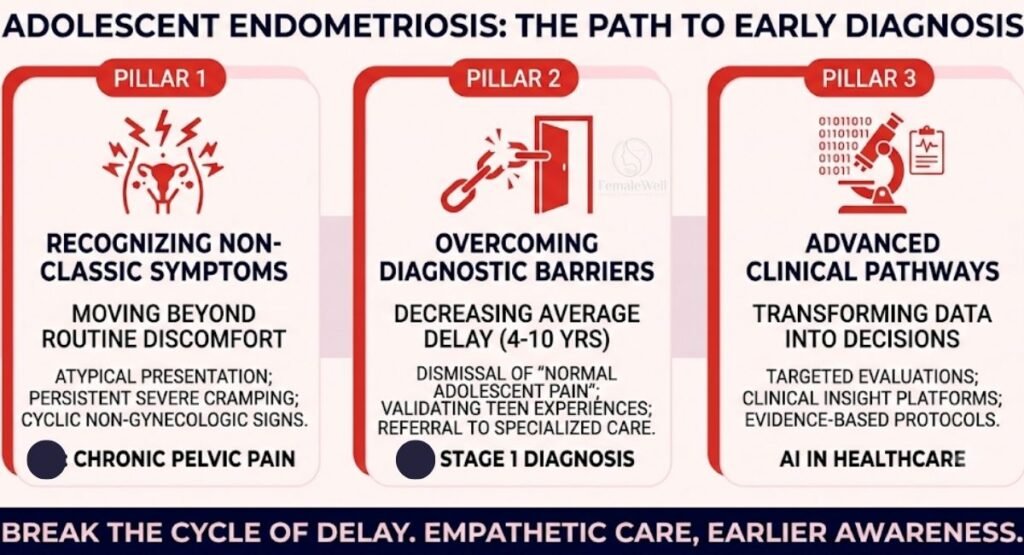
Recognizing ENDOMETRIOSIS early in adolescents requires looking far beyond routine MENSTRUAL DISCOMFORT. When severe pelvic pain or cyclical cramps interfere with school attendance and daily activities, specialized evaluation is critical.
CHRONIC PELVIC PAIN & Early Indicators
Adolescents often present with atypical clinical features. While adults frequently experience classic dysmenorrhea, teens may report non-gynecologic signs or persistent pain that fails to respond to standard over-the-counter anti-inflammatories. Early identification prevents long-term complications like PELVIC ADHESIONS. For deeper insights into diagnostic protocols, explore our LAB RESULT EXPLAINER GUIDE and resources on PELVIC FLOOR HEALTH.
Overcoming Diagnostic Delays
On average, patients face a diagnostic delay of 4 to 10 years. Dismissing teen pain as “normal adolescent adjustment” prolongs suffering and increases the risk of central sensitization. Utilizing advanced imaging or a targeted RECURRENT PREGNANCY LOSS GENETIC TESTING framework where applicable can streamline care. Additionally, emerging platforms featured in AI IN HEALTHCARE and HEALTHCARE TECHNOLOGY are transforming how clinicians evaluate complex pain profiles.
Understanding STAGE 1 ENDOMETRIOSIS and Clinical Presentation
STAGE 1 ENDOMETRIOSIS is classified as minimal disease under the American Society for Reproductive Medicine (ASRM) staging system. Doctors assess the location, appearance, and extent of endometriosis lesions, together with ADHESIONS.
Superficial Implants & Anatomy
Early-stage disease may involve small superficial implants around pelvic structures, including the UTEROSACRAL LIGAMENTS. However, a lower clinical stage does not mean a patient experiences mild symptoms. A teenager may experience SEVERE PERIOD PAIN, CHRONIC PELVIC DISCOMFORT, or pain during bowel movements despite having minimal visible disease.
Examination & Advanced Tools
Diagnosis may involve a comprehensive MEDICAL HISTORY, physical examination when appropriate, PELVIC ULTRASOUND or MRI SCAN. In selected cases, LAPAROSCOPY FOR ENDOMETRIOSIS allows a specialist to inspect the pelvis and obtain tissue samples. For related diagnostic guidance, review our LAB RESULT EXPLAINER GUIDE.
Personalized TREATMENT Framework
Treatment depends on individual symptoms, patient preferences, and CLINICAL FINDINGS rather than the numerical stage alone. Integrating advanced monitoring tools such as the BMI & IDEAL BODY WEIGHT CALCULATOR or tracking overall wellness through our 30 NATURAL WAYS TO MANAGE PCOS resource helps support comprehensive care.
FAQs about ENDOMETRIOSIS IN TEEN Girls
Understanding ENDOMETRIOSIS SYMPTOMS in adolescents can help families recognize when menstrual discomfort needs further investigation. Although cramps are common during adolescence, pain that repeatedly interrupts daily life should not be dismissed. A teenager does not need to wait until adulthood before asking for medical help or discussing possible GYNECOLOGICAL CONDITIONS IN ADOLESCENTS with a healthcare professional.
The following answers explain common concerns about TEENAGE ENDOMETRIOSIS DIAGNOSIS, IMAGING, TREATMENT and future REPRODUCTIVE HEALTH. Every teenager has a different experience, so symptoms and treatment decisions should be discussed with a qualified healthcare professional. Early assessment can help identify possible causes, improve MENSTRUAL PAIN MANAGEMENT and protect a young person’s quality of life. For broader wellness strategies, explore resources on 30 NATURAL WAYS TO MANAGE PCOS.
Yes. ENDOMETRIOSIS IN TEENAGE GIRLS can develop during adolescence, sometimes soon after menstruation begins. The condition occurs when tissue similar to the UTERINE LINING grows outside the uterus. These growths can trigger INFLAMMATION AND PAIN. A 14-year-old experiencing persistent PELVIC PAIN or debilitating menstrual cramps deserves an appropriate medical assessment rather than being dismissed because of her age. Learn more via our guide on MISCARRIAGE CAUSES SYMPTOMS SUPPORT or track cycles with the OVULATION CALCULATOR.
The early signs of endometriosis may include severe menstrual cramps, heavy menstrual bleeding, PELVIC DISCOMFORT and FATIGUE. Some teenagers experience painful bowel movements, painful urination, or LOWER BACK PAIN. Others report nausea, bloating, or pain that continues after menstruation ends. Symptoms vary considerably, so keeping a menstrual diary can help a doctor identify recurring patterns. For related insights, review PELVIC FLOOR HEALTH and the LAB RESULT EXPLAINER GUIDE.
Mild or moderate cramps can occur during a normal MENSTRUAL CYCLE, but severe pain that prevents a teenager from attending school or completing everyday activities deserves attention. Pain that persists despite appropriate treatment may indicate SECONDARY DYSMENORRHEA. According to ACOG, doctors should investigate possible underlying causes when symptoms fail to improve after three to six months of treatment. Check out MENSTRUATION MYTHS DEBUNKED.
STAGE 1 ENDOMETRIOSIS describes minimal disease under the ASRM CLASSIFICATION. It generally involves a limited number of superficial lesions with minimal or no ADHESIONS. However, endometriosis staging measures the extent of visible disease rather than the intensity of pain. Someone with minimal disease can experience significant discomfort, while another person with more extensive disease may report fewer symptoms.
Yes. Some teenagers have subtle symptoms or mistake recurring cramps for ordinary menstrual discomfort. Others may experience symptoms that doctors initially attribute to digestive problems or other conditions. Without proper assessment, teenage endometriosis diagnosis can take time. Recognizing recurring pain patterns and discussing FAMILY HISTORY can help healthcare professionals investigate possible endometriosis earlier. See our insights on SIGNS OF PERIMENOPAUSE.
Diagnosis begins with a detailed discussion about menstrual history, pain severity, and symptoms affecting daily activities. A general practitioner (GP) or adolescent gynecologist may recommend examination, blood tests for other conditions, or DIAGNOSTIC IMAGING. Ultrasound and MRI can identify certain forms of disease. If symptoms persist despite treatment, a specialist may discuss LAPAROSCOPY and POSSIBLE BIOPSY.
A pelvic ultrasound can identify OVARIAN ENDOMETRIOMAS, certain deep lesions, and other possible causes of pelvic pain. Depending on the teenager’s circumstances, doctors may use transabdominal or transvaginal imaging when appropriate. However, superficial endometriosis lesions can remain invisible on scans. Therefore, a normal ultrasound does not completely rule out endometriosis or eliminate the need for specialist assessment. Review AI-BASED PREDICTION OF PREECLAMPSIA for technological advances in diagnostics.
Teenage endometriosis can resemble several other conditions. Pelvic pain may be attributed to IRRITABLE BOWEL SYNDROME (IBS), ovarian cysts, or URINARY PROBLEMS. Some patients also experience hip pain, leg pain, or symptoms resembling SCIATICA. Limited awareness of adolescent endometriosis can contribute to medical dismissal. A second medical opinion may help when symptoms persist without a clear explanation.
Endometriosis can affect reproductive health, particularly when inflammation, ovarian involvement, or pelvic adhesions interfere with normal reproductive anatomy. However, a diagnosis does not mean a teenager will become infertile. Stage 1 endometriosis does not reliably predict FUTURE FERTILITY. Appropriate treatment and long-term specialist care can help manage symptoms while supporting informed reproductive health decisions. Explore EMPATHY IN FERTILITY CARE and PREGNANCY DUE DATE CALCULATOR.
Endometriosis treatment options depend on symptom severity, medical history, and individual preferences. Doctors may recommend NSAIDS for pain relief or HORMONAL CONTRACEPTION to reduce menstrual bleeding and suppress symptoms. Progestogens, including the hormonal intrauterine system, may also help. When symptoms remain difficult to control, specialists may discuss conservative endometriosis surgery alongside ongoing medical treatment.
Yes. Endometriosis can cause CHRONIC PELVIC PAIN that continues between menstrual periods. Some teenagers experience discomfort during ovulation, bowel movements, or urination. Inflammation and irritation around pelvic structures may contribute to these symptoms. Persistent pain outside menstruation should be discussed with a healthcare professional because it can indicate endometriosis or another underlying condition.
A teenager should seek medical advice when menstrual pain repeatedly interrupts school, sleep, sports, or normal activities. Medical assessment is especially important when painful menstrual cramps do not improve with recommended treatment or occur alongside heavy bleeding, bowel symptoms, or persistent pelvic discomfort. Sudden severe pain, fainting, fever, or very heavy bleeding requires URGENT MEDICAL ASSESSMENT.
Final Thoughts: Amplifying ADOLESCENT ENDOMETRIOSIS Voices
Being young does not make someone immune to ENDOMETRIOSIS. For teenagers, the condition can bring physical discomfort, emotional stress, and frustrating delays in receiving appropriate care. ENDOMETRIOSIS FROM A TEEN GIRL’S PERSPECTIVE reminds us that listening to young patients matters. Their SYMPTOMS deserve attention, even when routine examinations or initial scans appear normal.
With better MENSTRUAL HEALTH EDUCATION, timely referrals, and supportive healthcare professionals, teenagers can receive appropriate investigation and treatment. Parents, teachers, and clinicians all have a vital role in creating an environment where girls feel comfortable discussing their symptoms. Most importantly, no teenager should feel that she must prove her pain before someone takes it seriously. To support young mothers and families globally, initiatives like PROTECTING EXPECTANT MOTHERS MUST BE A GLOBAL PRIORITY emphasize compassionate care models.
References for More Details
Have your medical reviewer verify the details, particularly the treatment advice for minors and the discussion of surgical diagnosis.