Empathy in Fertility Care: Lessons From Public Health
Empathy as a Clinical Differentiator: What “Fertility Care” Can Learn From a Public Health Model
Empathy in fertility care is more than a reassuring voice or a kind response during a difficult appointment. It is a practical part of patient-centered care that can shape how people access services, understand their options, and experience treatment. For fertility clinics, the challenge is not simply to provide excellent medical care. It is to make every interaction feel respectful, clear, and responsive to individual needs.
The principles of public health offer a useful way to approach this challenge. Public health considers how healthcare systems serve individuals and communities, including whether services remain accessible, coordinated, and equitable. When fertility clinics apply these principles, they can begin to close the invisible gap in fertility care: the difference between reaching a clinic and actually feeling seen by a fertility clinic. This shift makes empathy a practical standard of care rather than an optional personality trait.
A Public Health Perspective on the Fertility Care Experience
A successful fertility journey begins long before a medical procedure—starting the moment someone searches for answers or makes an initial enquiry. Integrating the World Health Organization’s framework for integrated people-centred care allows clinics to align healthcare accessibility, communication, and continuity directly with individual patient values and preferences.
System-Wide Navigation
Public health teaches organizations to address system barriers early. Instead of expecting patients to overcome complex obstacles alone, clinics can evaluate processes to ensure seamless transitions from initial inquiries to informed treatment decisions.
Beyond Basic Availability
Getting an appointment is only the first step. True accessibility requires transparent information, predictable response times, and consistent communication from all staff members, turning availability into genuine support.
Advancing Health Equity
Fertility journeys are shaped by financial, geographic, cultural, and personal factors across diverse regions like the US, UK, and EU. Respectful communication and clear fee structures provide dignity rather than leaving patients to manage complex systems without help.
Patient-Centered Decision Making
True patient-centered care prioritizes open dialogue over strict checklists. Reviewing the patient perspective on fertility care shows the value of clearly explaining treatment options, risks, and alternatives while offering adequate time for questions.
Measuring Quality Beyond Medical Outcomes
While pregnancy and live-birth rates offer essential clinical metrics, they do not tell the complete story. Grounded in the WHO’s quality-of-care framework, true healthcare excellence incorporates timeliness, safety, privacy, and equity. Combining clinical outcomes with systematic patient feedback allows clinics to pinpoint hidden service gaps and continually improve care.
Closing the Invisible Gap Between Reaching a Clinic and Feeling Seen
A person’s first enquiry to a fertility clinic carries significant emotional weight. Operational procedures—from the initial call to consultation follow-ups—directly influence whether patients feel comfortable, respected, and seen as individuals rather than schedule entries.
First Contact & Trust
A initial greeting sets the tone. Calm communication, accurate instructions, and clear next steps establish an early foundation of trust and empathy before clinical care even begins.
People Over Processes
Schedules and records are necessary, but administrative checklists should never overshadow human communication. Noticing uncertainty and confirming understanding keeps care truly patient-centered.
Transparency & Honesty
Empathetic care combines hope with accuracy. Explaining real risks, timelines, and costs empowers patients to make decisions that align with their personal priorities without unrealistic promises.
Managing the Emotional Burden
Fertility treatment involves navigating medical uncertainties, financial decisions, and emotional stress. To support staff in addressing these complex needs, the European Society of Human Reproduction and Embryology offers a psychosocial care guideline for fertility staff, emphasizing structured emotional and social support throughout every phase of treatment.
Recognizing Diverse Family Structures
There is no single path to building a family. Inclusive reproductive health services support single parents, same-sex couples, donor recipients, and individuals preserving fertility without intrusive assumptions—using respectful communication to ensure everyone feels genuine welcome.
Empathy as a Trainable Clinical Skill, Not Just an Inherent Trait
Effective clinical empathy goes beyond natural warmth—it involves structured skills like emotional awareness, empathic accuracy, and perspective-taking that can be cultivated through deliberate practice, supervision, and supportive organizational frameworks.
Defining Clinical Empathy
Clinical empathy focuses on understanding a patient’s viewpoint and clearly communicating that comprehension. It does not require adopting the patient’s exact emotions, but rather respecting their unique priorities during treatment decisions.
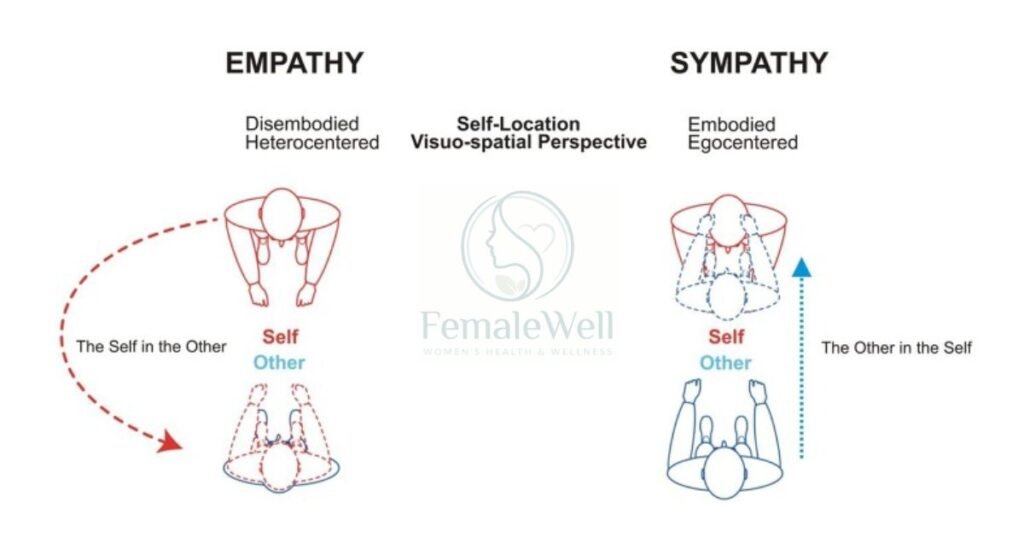
Empathy vs. Sympathy
While sympathy expresses sorrow for a difficulty, empathy strives to understand the direct experience. Combined with compassion’s drive to help, these responses strengthen patient communication without blurring professional boundaries.
Empathic Accuracy & Awareness
Recognizing subtle signs of distress—such as hesitation or repeated questions—allows staff to explore concerns directly through open-ended dialogue rather than making rigid assumptions about patient needs.
Shared Decision-Making
Perspective-taking allows clinicians to view care plans through the patient’s eyes. Integrating clinical evidence with personal preferences empowers patients to make informed choices suited to their own circumstances.
Evidence & Staff Training
Structuring training across receptionists, nurses, clinicians, and administrative teams ensures a cohesive patient experience. An umbrella review of empathy training in healthcare evaluates these educational approaches, confirming that developing relational skills builds consistent patient-centered care.
Empathy as a Method, Not a Mood: Embedding Care into Daily Work
To make clinical empathy consistent, clinics must integrate structured listening, clear communication standards, and repeatable workflows into everyday operations—transforming empathy from an optional personality trait into a measurable standard of care.
The 5-Step Interaction Model
A practical framework guides staff to listen carefully, acknowledge concerns, clarify needs, explain next steps, and confirm understanding—maintaining perceptive engagement without relying on rigid scripts.
Standard Operating Procedures
Embedding communication standards into onboarding, call routing, and intake protocols ensures service quality stays high during busy periods, independent of which staff member answers the phone.
Personalizing Without Losing Pace
Consistency doesn’t mean identical conversations. Staff can adapt their language and format to match individual preferences—whether a patient prefers detailed explanations or written resources to review later.
Measurable Patient Feedback
Surveys and advisory groups help uncover hidden gaps—such as post-test result uncertainty—allowing clinics to track observable behaviors and verify whether improvements genuinely help patients feel supported.
Supporting Staff Well-Being
Remaining attentive during demanding shifts requires more than good intentions. Providing manageable workloads, regular supervision, adequate training, and clear escalation pathways ensures staff have the time and organizational resources needed to sustain compassionate, high-concentration care.
Creating Accountability for Patient-Centered Care
Leaders turn expectations into culture by reviewing standards, discussing feedback constructively, and recognizing when systemic hurdles contribute to friction. When entire teams share responsibility for respectful service, patient-centered care becomes a lived reality rather than a website slogan.
The Future of Patient-Centered Fertility Care
Combining medical expertise with accessible information, inclusive communication, and public health perspectives ensures that fertility services remain equitable, responsive, and grounded in human dignity across every region.
Equitable Access Across Regions
Whether navigating US insurance structures, UK NHS and private pathways, or diverse EU member state regulations, clinics must clearly communicate fees and eligibility without implying universal availability.
Balancing Tech & Human Connection
While portals and digital tools streamline routine tasks, they must not create barriers for vulnerable patients. AI voice scripts require careful oversight to ensure distressed callers always reach compassionate human judgment.
Building Inclusive Services
Inclusive reproductive health treats accessibility, cultural awareness, and diverse family structures as fundamental elements of service design rather than accommodations reserved for special requests.
Recognizing Empathy in Quality
Empathy complements clinical safety and effectiveness. By incorporating respectful communication into regular quality reviews, clinics reinforce that patients deserve clear information and meaningful participation.
Integrating Psychosocial Support
Emotional support should never wait until a crisis occurs. By following the ESHRE psychosocial care guideline, multidisciplinary teams can recognize distress, offer appropriate counseling resources, and maintain compassionate continuity throughout treatment.

FAQs About Empathy in Fertility Care
Explore practical insights on how healthcare services balance empathy with clinical standards, bridge public health principles, and foster patient trust throughout fertility treatment.
Empathy Should Be a Standard of Fertility Care, Not an Extra
The quality of fertility care depends on more than clinical expertise and advanced technology. Patients also need clear explanations, reliable communication, appropriate emotional support, and respect for their individual circumstances. A public health model helps clinics look beyond individual appointments to the systems that shape access, continuity, and patient experience.
The next step is to turn that principle into everyday practice—training staff, monitoring feedback, and building a service where people receive not only competent treatment but also the dignity and support they deserve.
References and Further Reading
The following sources provide a foundation for the article’s discussion of public health, fertility care, psychosocial support, and clinical quality.
| Source | Relevance |
|---|---|
| World Health Organization: Integrated people-centred care | People-centered services, accessibility, coordination, and equity |
| Dancet et al. (2010): The patients’ perspective on fertility care | Systematic review of patient perspectives on fertility services |
| ESHRE: Routine psychosocial care in infertility | Psychosocial needs and practical guidance for fertility staff |
| WHO: Quality of health services | Quality, safety, equity, timeliness, and people-centered care |
| NICE: Fertility problems, assessment and treatment | UK guidance on fertility assessment and treatment |
| Human Fertilisation and Embryology Authority | UK fertility clinic information, regulation, and patient guidance |
| American Society for Reproductive Medicine | Professional resources relating to reproductive medicine in the United States |
Editorial Note
The article uses an illustrative, practice-based discussion rather than presenting invented patient case studies or fabricated quotations as evidence. Before publication, verify any new statistics, cost estimates, and jurisdiction-specific clinical recommendations against the original sources.