
Breast Pain: Reasons, Warning Signs & Proven Solutions
Navigating Breast Discomfort and Mastalgia
Breast discomfort can catch you off guard. One day, your breasts feel normal. The next, they feel tender, heavy or unusually sensitive. Breast pain, also called mastalgia, is common and often relates to hormonal fluctuations or benign breast conditions.
However, the reason behind your discomfort depends on its location, timing and accompanying symptoms. Understanding the possible breast pain causes can help you decide what to do next. Some cases improve with simple home care, while others need medical assessment. Although pain alone is rarely a sign of breast cancer, you should not ignore a new lump, unusual nipple discharge or changes in your breast’s appearance. For broader wellness monitoring, you can also review resources on AI Wearables, Blood Tests & Health Data and related gynecological care like Pelvic Floor Health.
Key Clinical Indicators
- Hormonal Fluctuations & Cycle Tracking
- Benign Breast Conditions Evaluation
- Screening for Nipple Discharge & Lumps
- Integration with AI-Based Prediction Models
Who Can Get Sore Boobs?
Anyone with breast tissue can experience sore breasts, regardless of sex, gender identity or age. Hormonal changes, certain medications, pregnancy, breastfeeding and chest injuries can all contribute to discomfort.
The phrase sore boobs describes a familiar symptom, but the experience varies widely. Some people notice mild tenderness, while others develop persistent pain that affects sleep, exercise or daily activities. Your anatomy and medical history help determine the likely cause. For example, someone who menstruates may experience predictable tenderness before a period, while another person may develop pain after starting hormone therapy. Understanding breast pain risk factors helps guide the next steps, but symptoms alone cannot confirm a diagnosis through standard evaluation or advanced AI-Based Prediction models.
Women
Women commonly experience breast tenderness during the menstrual cycle, pregnancy and perimenopause. Hormonal fluctuations can cause breast swelling, fullness and aching, especially during the two weeks before menstruation. Breast pain during pregnancy may also occur as breast tissue changes. However, persistent pain, a new lump or unusual nipple discharge deserves medical assessment rather than an assumption that hormones explain everything.
Men
Breast pain in men can occur because of gynecomastia, a condition involving enlargement of glandular breast tissue. An estrogen and testosterone imbalance may contribute, although medications and other health conditions can also play a role. A tender area or lump should be assessed by a healthcare professional, particularly if it grows, feels hard or comes with nipple discharge or skin changes.
Transgender individuals
Breast pain in transgender individuals may develop during gender-affirming hormone therapy as breast tissue changes. Transgender men may also experience discomfort involving residual breast tissue after mastectomy. Surgery does not always remove every trace of breast tissue, and chest-wall pain can have other causes. Persistent or new symptoms deserve individualized assessment without assumptions about a person’s treatment or anatomy.
Non-Binary People
Breast pain in non-binary people can relate to menstrual cycles, hormone therapy, breast tissue changes or previous chest surgery. Some people experience breast pain during transgender hormone therapy, while others develop tenderness for unrelated reasons. A clinician can tailor the assessment to the person’s symptoms, medical history and anatomy, using respectful language throughout clinical care.

What do painful breasts feel like?
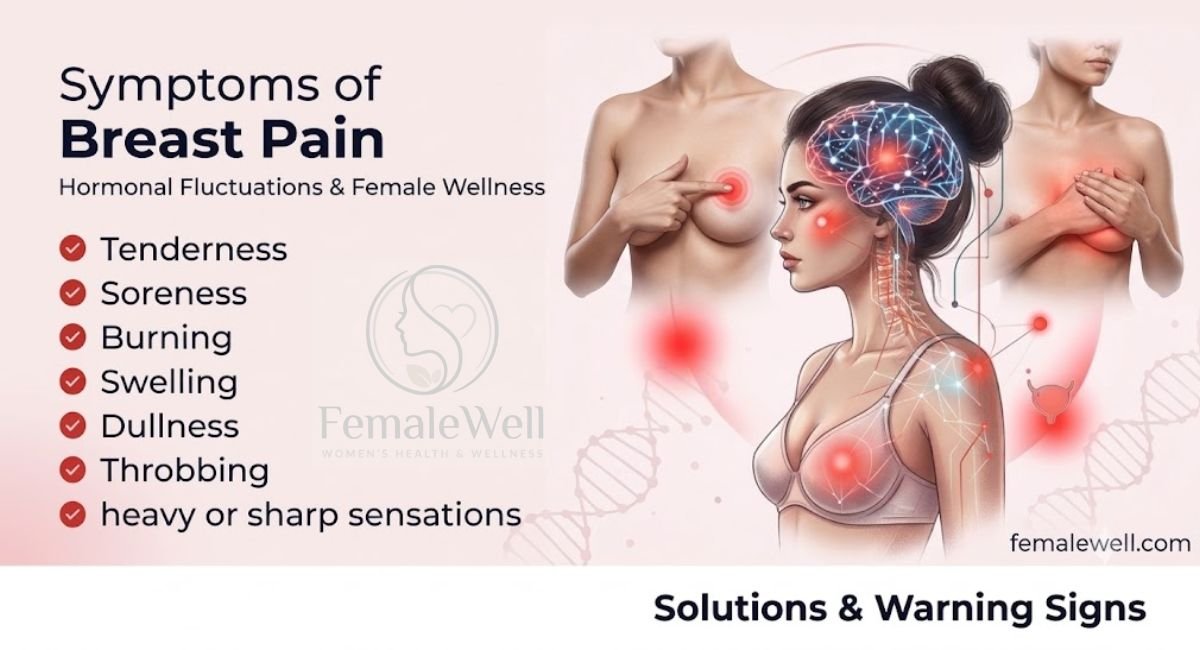
The sensation can range from a dull ache to sharp, burning or shooting discomfort. Some people notice nipple pain and sensitivity, while others experience heaviness, swelling or tenderness when touching the breast. Pain may affect one side or both, and it can appear briefly or persist for longer periods.
The pattern provides useful clues, although it cannot identify the cause on its own. Left breast pain or right breast pain may originate in breast tissue, the ribs or nearby muscles. If discomfort feels like chest pressure or occurs with breathlessness, sweating, faintness or pain spreading to the arm or jaw, seek emergency medical help rather than assuming it is a breast problem.
Where does it hurt?
The location can help distinguish breast-related discomfort from pain arising in nearby structures. Pain inside breast tissue may relate to hormonal changes, cysts or inflammation, while discomfort near the ribs may involve muscles or cartilage. A clinician will also consider how long the pain lasts, whether it follows a menstrual pattern and whether other symptoms are present, utilizing advanced AI in Healthcare diagnostic tools.
Outside of the Breast
Pain outside the breast may follow an injury, a muscle strain or a procedure such as mammography or biopsy. Breastfeeding can also cause nipple irritation, cracked skin or infection. Friction from clothing may worsen tenderness. If symptoms develop alongside spreading redness, warmth, swelling or fever, seek prompt medical advice because these may indicate infection.
Inside of the Breast
Pain inside the breast may result from hormonal fluctuations, breast cysts, fibrocystic changes or inflammation. Some people notice a tender lump or a feeling of fullness that changes during the menstrual cycle. A smooth movable breast lump is often benign, but its texture cannot confirm the diagnosis. Arrange an assessment for a new lump or any accompanying skin or nipple changes.
Under the Breast
Pain underneath the breast may come from strained chest muscles, irritated rib cartilage or skin inflammation. Sometimes, discomfort beneath the left breast can reflect a heart problem rather than breast tissue. Seek emergency help for chest pressure, breathlessness, cold sweats or pain spreading to the arm, back or jaw. Do not rely on the location of pain alone to rule out a serious cause.
Why do my Breasts Hurt?
The answer may involve hormonal fluctuations, cysts, inflammation, medication effects or pain from the chest wall. Breast pain related to hormonal changes often follows a recognizable pattern, while other causes may produce persistent or localized discomfort. A healthcare professional can assess your symptoms and decide whether an examination or imaging is appropriate.
Hormonal Changes
Hormonal changes during menstruation, pregnancy, fertility treatment and menopause can make breast tissue feel swollen or tender. Breast tenderness before period often begins in the days or weeks leading up to menstruation and improves afterward. Hormonal contraception and certain medicines may also contribute. If pain begins after a medication change, discuss it with your clinician rather than stopping prescribed treatment yourself.
Cysts
Breast cysts are fluid-filled sacs that may cause tenderness or a palpable lump. Symptoms of breast cysts can include a smooth, movable lump, localized pain and changes in tenderness around menstruation. Breast lump size changes before menstruation can occur with hormone-sensitive cysts. Many cysts are benign, but a new or changing lump needs assessment. A clinician may recommend ultrasound and, when appropriate, drainage for symptom relief.
Fibrocystic breast disease
Fibrocystic breast changes can make breast tissue feel lumpy, rope-like or tender. The discomfort may worsen before menstruation and ease afterward. These changes are generally benign, although they can make it harder to distinguish normal tissue from a new lump. Report any new or unusual change to a healthcare professional rather than assuming it is part of a familiar pattern.
Infection and Inflammation
A breast infection can cause pain, warmth, redness and swelling. Some people also develop fever, chills or flu-like symptoms, particularly with mastitis during breastfeeding. Breast inflammation and tenderness can occur with or without infection, so treatment depends on the cause. Seek prompt assessment if your breast becomes red or hot, swelling increases or you develop fever. An abscess may require drainage.
Granulomatous mastitis
Granulomatous mastitis is an uncommon inflammatory breast condition that can cause a painful lump, swelling and skin changes. Its appearance can resemble breast cancer, making proper diagnosis important. Granulomatous mastitis symptoms may require imaging and sometimes a tissue biopsy to clarify the cause. Treatment varies and may involve monitoring, medication or surgery under specialist care.

When should you worry about breast pain?
Most painful breasts are not caused by cancer, especially when discomfort affects both breasts and follows a menstrual pattern. However, breast pain warning signs include a new lump, bloody nipple discharge, skin dimpling, a newly inverted nipple or a change in breast shape. Persistent pain in one specific area also deserves attention, particularly when it is new or worsening.
Knowing when to seek help can prevent unnecessary worry while avoiding delays in care. Breast pain and breast cancer are not automatically linked, and pain alone is rarely the only sign of cancer. Still, new breast changes should be assessed promptly. Severe chest symptoms or signs of a serious infection require urgent care rather than routine monitoring, assisted by advanced AI Tools for Oncologists for diagnostic accuracy.
When to see a Doctor
Arrange a medical appointment if breast pain lasting more than two weeks does not improve, keeps returning in one area or interferes with daily activities. Seek prompt assessment for a new lump, unusual nipple discharge, skin changes or pain that continues after menopause (supported by guidance on Signs of Perimenopause). A clinician may examine your breasts and chest wall, review medications and decide whether ultrasound or diagnostic mammography is needed. Imaging depends on your age, symptoms and examination findings.
Cyclic and noncyclic breast pain symptoms
The difference between cyclic and noncyclic breast pain mainly involves timing and pattern. Cyclic breast pain symptoms usually follow the menstrual cycle and often affect both breasts. Noncyclic breast pain symptoms do not follow a predictable cycle and may remain localized or occur intermittently. Neither pattern confirms a diagnosis, so persistent focal pain or accompanying breast changes should still be assessed using continuous data from AI Wearables, Blood Tests & Health Data.
| Feature | Cyclic breast pain | Noncyclic breast pain |
|---|---|---|
| Timing | Often worsens before menstruation | Not consistently linked to menstruation |
| Sensation | Dull, heavy or aching | Sharp, burning, tight or aching |
| Location | Often affects both breasts | May affect one breast or a specific area |
| Possible causes | Hormonal fluctuations | Cysts, inflammation or chest-wall problems |
| Next step | Track the pattern and seek advice if concerned | Seek assessment if persistent, focal or worsening |
Breast Pain Solutions
Effective breast pain relief depends on the cause. A supportive, well-fitted bra and a warm or cold compress may ease discomfort. Suitable over-the-counter pain relief, such as paracetamol or ibuprofen, may help when safe for you. Ask a pharmacist or clinician if you are pregnant, breastfeeding, have other medical conditions or take medicines that could interact.
Breast pain treatment may also involve treating an infection, reviewing medication or draining a symptomatic cyst when clinically appropriate. A lactation consultant can help with breastfeeding position and latch problems, while nipple creams may be useful for selected cases of irritation. Evidence for some natural remedies for breast pain, including evening primrose oil and vitamin E, remains limited. Do not attempt breast cyst drainage at home.

FAQs about Breast Pain
Get expert answers regarding mastalgia, breast cancer risk, hormonal shifts, and when to seek professional medical assessment.
Usually, no. Breast pain alone is rarely associated with cancer, but a new lump, skin dimpling, nipple changes or bloody discharge needs medical assessment.
Hormonal fluctuations can cause temporary swelling and tenderness. Symptoms often improve when menstruation ends.
Yes. Medication effects, cysts, chest-wall problems and other conditions may cause discomfort. New or persistent pain should be assessed.
A supportive bra, warm or cold compresses and suitable pain relief may help. Seek medical advice if symptoms persist or worsen.
Get prompt care for a hot, red or swollen breast with fever. Call emergency services for chest pressure, breathlessness or pain spreading to the arm or jaw.
Conclusion
Although breast pain can feel worrying, many cases relate to hormonal changes or benign conditions. Tracking when the pain starts, where it occurs and whether other symptoms appear can help your clinician identify possible causes. Simple measures may ease discomfort, but persistent pain or unusual breast changes deserve attention, supported by insights from AI in Healthcare tools. If something feels different from your normal pattern, getting checked is a sensible next step.
References
- NHS. Breast pain: Causes, relief and when to seek medical help.
- Mayo Clinic. Breast pain: Diagnosis and treatment.
- American College of Radiology. Appropriateness Criteria: Breast Pain.
- RadiologyInfo.org. Breast Pain: Imaging guidance.
- Tahir MT and Shamsudeen S. Mastalgia — StatPearls, NCBI Bookshelf.