
Feminine Hygiene
FEMININE HYGIENE: 10 Must-Know to Prevent VAGINAL INFECTIONS & Support INTIMATE HEALTH
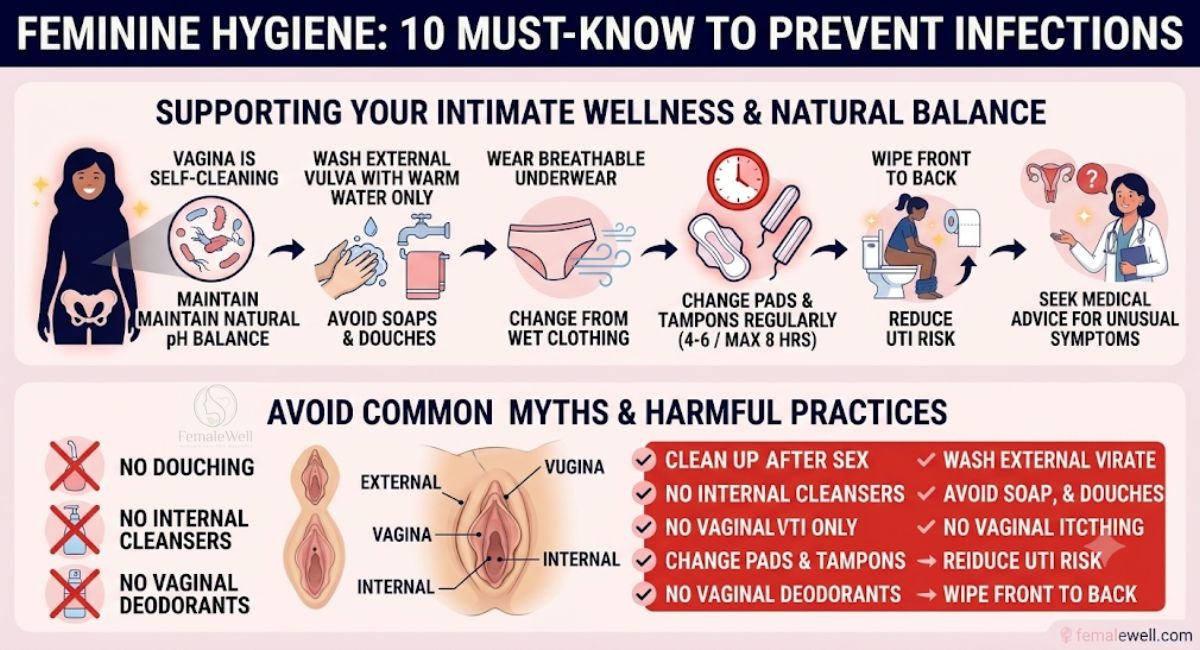
Your intimate health deserves attention, but keeping your VAGINA healthy does not require expensive products or complicated routines. A few thoughtful daily habits can help you avoid irritation, support your natural VAGINAL MICROBIOME, and recognize early signs of VAGINAL YEAST INFECTIONS or related complications. Understanding feminine hygiene also helps you separate genuine HEALTH ADVICE from common myths about intimate care, similar to debunking various MENSTRUATION MYTHS.
From choosing comfortable underwear to maintaining proper MENSTRUAL HYGIENE and managing concerns like VAGINAL ATROPHY or discomfort, small decisions can make a meaningful difference in your REPRODUCTIVE HEALTH. For personalized insights, you can also explore tools like our LAB-RESULT EXPLAINER GUIDE.
NATURAL PROTECTIVE MECHANISMS
Cleanliness does not mean washing more often. Your body already possesses powerful DEFENSE MECHANISMS. The goal is to support them rather than disrupt them with unnecessary products or aggressive cleansing routines. Learn more about maintaining a balanced WHOLE BODY APPROACH to wellness.
- ✨ Maintain balanced VAGINAL PH LEVELS
- ✨ Avoid harsh chemical douches
- ✨ Support overall PELVIC FLOOR HEALTH
Maintaining Good FEMININE HYGIENE
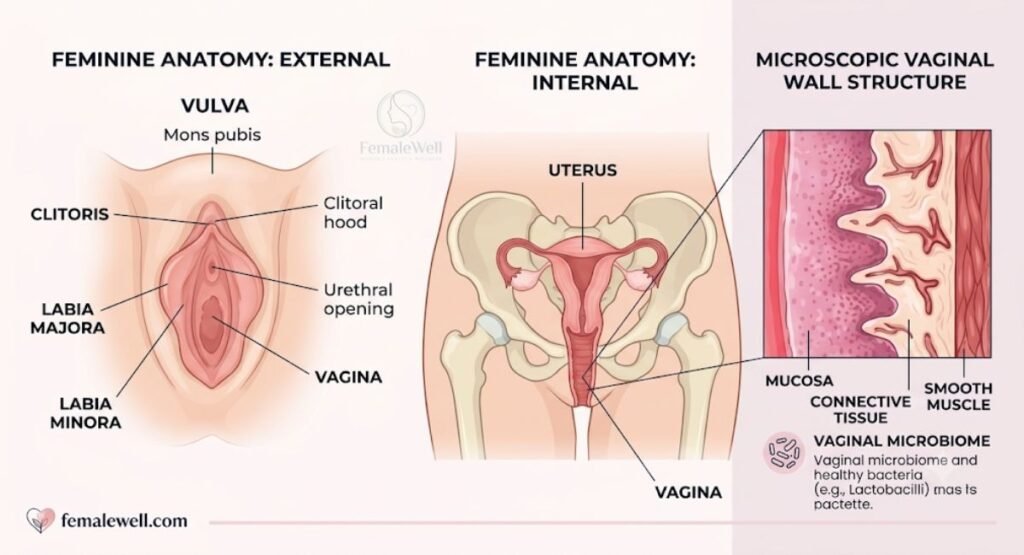
Good VAGINAL HYGIENE begins with understanding your ANATOMY. The VAGINA is an internal muscular canal that naturally cleans itself through normal SECRETIONS. The VULVA, meanwhile, includes the external genital structures and needs gentle everyday care. Maintaining this distinction helps you practice proper FEMININE HYGIENE without disturbing the natural VAGINAL ENVIRONMENT, supporting overall PELVIC FLOOR HEALTH.
Your VAGINAL MICROBIOME contains different MICROORGANISMS, including beneficial bacteria called LACTOBACILLI. These bacteria help maintain an ACIDIC ENVIRONMENT that discourages the excessive growth of certain harmful MICROORGANISMS. When this balance changes, you may become more susceptible to conditions such as BACTERIAL VAGINOSIS or YEAST INFECTIONS. Healthy habits can support your NATURAL DEFENSES, although no hygiene routine can prevent every INFECTION.
💡 PRO TIP: Avoid harsh chemical douches or scented washes that strip away beneficial LACTOBACILLI and disrupt your natural VAGINAL PH BALANCE.
Keep Your VAGINA Dry: 4 Key Habits
Excess MOISTURE around the external genital area can encourage FRICTION and skin IRRITATION. Therefore, learning to keep your VAGINAL AREA dry is an important part of everyday VULVAR HYGIENE. Normal VAGINAL DISCHARGE is not something you need to remove; it helps keep the VAGINA moist and clean. Instead, focus on reducing trapped SWEAT and MOISTURE around your VULVA, especially after EXERCISE or SWIMMING.
Wear BREATHABLE UNDERWEAR
Your choice of underwear can influence COMFORT throughout the day. BREATHABLE COTTON UNDERWEAR allows AIRFLOW and can help reduce MOISTURE RETENTION around SENSITIVE SKIN. Choose comfortable fabrics and avoid garments that cause persistent RUBBING or pressure. You do not need to wear underwear overnight if sleeping without it feels more comfortable.
Change Out of Wet Clothing Promptly
Staying in damp WORKOUT CLOTHES or a wet swimsuit for hours can leave your external genital area warm and uncomfortable. This combination of MOISTURE and FRICTION may aggravate SENSITIVE SKIN. Make it a habit to change out of wet clothing promptly after SWIMMING, EXERCISING, or SWEATING. Put on clean, dry clothing to reduce unnecessary IRRITATION.
Wipe Correctly After Using the Bathroom
Your BATHROOM HABITS matter more than you might think. Always wipe from FRONT TO BACK after urinating or passing stool. This helps prevent INTESTINAL BACTERIA from spreading towards the URETHRAL OPENING. Since these bacteria can cause URINARY TRACT INFECTIONS (UTIs), careful wiping is a sensible preventive habit. Use soft toilet paper and avoid vigorous RUBBING.
Avoid PANTY LINERS Daily
PANTY LINERS can help manage light SPOTTING or occasional DISCHARGE. However, wearing them continuously may increase heat, FRICTION, and discomfort, particularly if they contain fragrances or irritating adhesives. It is sensible to avoid wearing PANTY LINERS daily when you do not need them. If you use them, choose UNSCENTED PRODUCTS and change them regularly.
Change SANITARY PADS Every 4–6 Hours
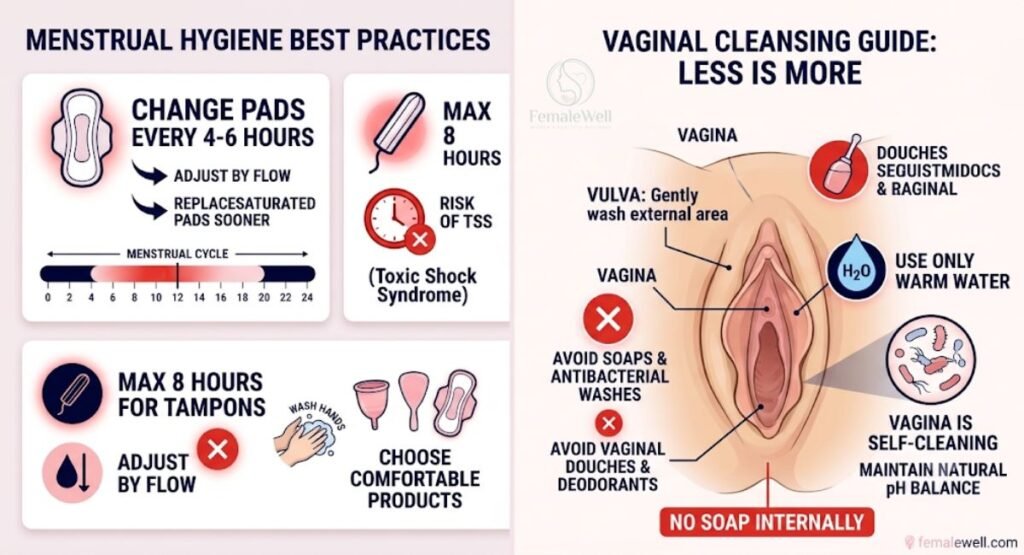
Good MENSTRUAL HYGIENE protects your comfort during your period. Make it a habit to change SANITARY PADS regularly, adjusting the frequency according to your MENSTRUAL FLOW and the product instructions. Changing pads every 4–6 hours can be a useful routine, although you should replace a saturated or uncomfortable pad sooner. Wash your hands before and after handling MENSTRUAL PRODUCTS, and consider tracking your cycle using our PMS SYMPTOMS ACROSS MENSTRUAL CYCLE guide.
TAMPONS require particular attention because prolonged wear increases the risk of TOXIC SHOCK SYNDROME (TSS), a rare but potentially life-threatening condition. Follow the manufacturer’s instructions and never leave a tampon in for more than eight hours. MENSTRUAL CUPS and reusable pads also need proper cleaning and storage. Choose suitable FEMININE HYGIENE PRODUCTS that feel comfortable and do not cause irritation.
Don’t Use SOAP Internally
More cleansing does not necessarily mean better genital hygiene. Strongly scented SOAPS, antibacterial washes, and VAGINAL DEODORANTS can irritate sensitive VULVAR SKIN. They may also disturb the natural environment when used internally. Instead, wash the vulva with warm water and avoid unnecessary products. If a cleanser causes dryness or burning, stop using it.
Remember that the VAGINA is self-cleaning. You do not need to wash inside it or use VAGINAL DOUCHES to remove normal secretions. These practices can disturb healthy VAGINAL BACTERIA and affect your VAGINAL PH BALANCE. Gentle external intimate area cleansing is generally sufficient. This simple approach supports your natural VAGINAL BALANCE without unnecessary intervention. ACOG’S VULVOVAGINAL HEALTH GUIDANCE explains why douches and intimate deodorants are best avoided.
EXPERT WELLNESS TIP
Maintaining proper intimate health also connects to broader routines such as understanding your PELVIC FLOOR HEALTH and utilizing reliable wellness calculators and tools when managing body changes.
Clean Up After Sex & POST-SEX HYGIENE
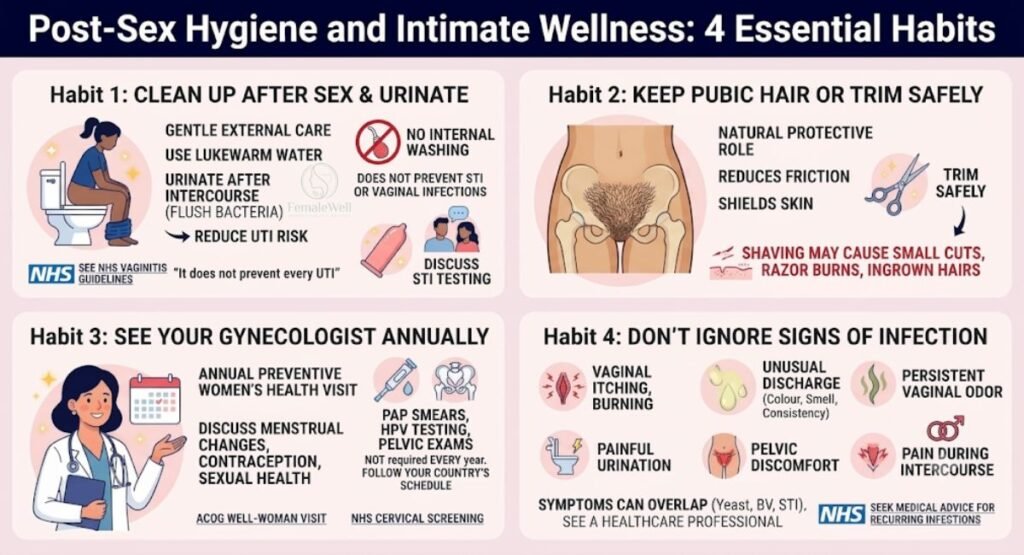
Sexual activity can expose the genital area to FRICTION, BODILY FLUIDS, and MICROORGANISMS. Therefore, POST-SEX HYGIENE should focus on comfort and gentle external care rather than aggressive washing. You can clean your intimate area after sex using LUKEWARM WATER. Avoid internal washing because it does not protect you from SEXUALLY TRANSMITTED INFECTIONS (STIS) or reliably prevent VAGINAL INFECTIONS. For further insights on overall wellness tracking, explore resources like our BLOOD PRESSURE READING EXPLAINER.
Another useful habit is to urinate after sexual intercourse. This may help flush bacteria from the URETHRA and could reduce the risk of URINARY TRACT INFECTIONS (UTIS), although evidence for its preventive effect is limited. NHS guidelines proves that “IT DOES NOT PREVENT EVERY UTI OR REPLACE MEDICAL TREATMENT”. Using CONDOMS correctly, discussing STI TESTING with partners, and seeking care for unusual symptoms are also important parts of your overall SEXUAL HEALTH.
Don’t Shave Off PUBIC HAIR
PUBIC HAIR has a natural protective role. It reduces FRICTION and helps shield delicate EXTERNAL SKIN from irritation. However, removing it is a personal choice rather than a HYGIENE REQUIREMENT. You do not need to shave to maintain cleanliness. In fact, shaving may cause SMALL CUTS, RAZOR BURNS, INGROWN HAIRS, and inflammation around hair follicles. These problems can make your intimate area uncomfortable.
If you prefer grooming, trim pubic hair safely with clean equipment rather than removing every hair. If you choose to shave, use a clean razor and avoid shaving irritated skin. Learning to avoid shaving pubic hair completely may help reduce grooming-related problems, although pubic hair itself does not guarantee protection against vaginal infections or UTIs. ACOG’S GUIDANCE ON VULVAR CARE offers further advice.
See Your GYNECOLOGIST Annually
Regular gynecologist check-ups give you an opportunity to discuss MENSTRUAL CHANGES, CONTRACEPTION, sexual health, and unusual VAGINAL SYMPTOMS. An annual preventive WOMEN’S HEALTH VISIT can be useful even when you feel healthy. However, the tests you need depend on your age, MEDICAL HISTORY, and individual RISK FACTORS. PAP SMEARS, HPV TESTING, and PELVIC EXAMS are not automatically required every year. FOLLOW THE SCREENING SCHEDULE RECOMMENDED IN YOUR COUNTRY.
Screening recommendations differ across the USA, UK, and EU. For example, NHS CERVICAL SCREENING IN ENGLAND GENERALLY INVITES ELIGIBLE PEOPLE AGED 25–64 EVERY FIVE YEARS. Other countries follow their own national programmes. Your clinician can also recommend testing for sexually transmitted infections (STIs) when appropriate. Regular appointments support your REPRODUCTIVE HEALTH and give you a chance to discuss concerns without embarrassment.
Don’t Ignore Signs of INFECTION
Your body often gives you clues when something is wrong. VAGINAL ITCHING, BURNING, unusual discharge, and persistent unpleasant odor can indicate irritation or infection. Pay attention to abnormal vaginal discharge, particularly when its colour, smell, or consistency changes. However, symptoms alone cannot reliably identify the cause. A YEAST INFECTION, BACTERIAL VAGINOSIS, and an STI can produce overlapping symptoms, so guessing the diagnosis may delay appropriate treatment.
Watch for persistent VAGINAL ODOR, PAINFUL URINATION, PELVIC DISCOMFORT, and PAIN DURING SEXUAL INTERCOURSE. These symptoms deserve medical attention, especially when they are new or recurring. Changes in vaginal discharge consistency may also need investigation. A healthcare professional can help you recognize signs of vaginal infections through an examination and appropriate testing. THE NHS RECOMMENDS TO SEEK MEDICAL ADVICE FOR RECURRING INFECTIONS INSTEAD OF REPEATEDLY USING OVER-THE-COUNTER TREATMENTS WITHOUT A CONFIRMED DIAGNOSIS.
FAQs About FEMININE HYGIENE
Understanding female intimate care becomes easier when you have reliable answers to common questions. Remember that normal discharge, natural VAGINAL MOISTURE, and changes throughout your MENSTRUAL CYCLE are not automatically signs of poor hygiene. Your individual symptoms and health history matter more than appearance alone.
The following answers address common concerns about everyday feminine hygiene practices, infection prevention, and VAGINAL HEALTH. They can help you make informed decisions while recognizing when professional MEDICAL ADVICE is necessary. For comprehensive clinical tracking and personal data insights, you can also consult tools like our LAB-RESULT EXPLAINER GUIDE and BLOOD PRESSURE READING EXPLAINER.
The best approach is gentle and consistent. Wash your external vulva with lukewarm water, wear comfortable underwear, and change out of damp clothing. Practice proper MENSTRUAL HYGIENE and avoid scented intimate products. You should also pay attention to unusual symptoms rather than trying to eliminate normal VAGINAL DISCHARGE.
You can gently rinse the external vulva with water as part of your daily routine. However, the VAGINA does not require internal washing. Its natural secretions help maintain cleanliness and moisture. Avoid DOUCHING, internal cleansers, and unnecessary deodorants because they may disturb the VAGINAL MICROBIOME.
Certain hygiene habits can contribute to irritation or disturb the vaginal environment. However, vaginal infections do not simply result from being unclean. BACTERIAL VAGINOSIS involves changes in vaginal bacteria, while YEAST INFECTIONS involve excessive fungal growth. Both can occur despite careful hygiene.
A practical routine is to change your pad every four to six hours, or sooner if it becomes saturated. Your menstrual flow and the product’s absorbency determine how frequently you need a replacement. Always follow the manufacturer’s instructions and maintain clean hands when changing MENSTRUAL PRODUCTS, keeping in mind guidance from our PMS SYMPTOMS ACROSS MENSTRUAL CYCLE overview.
Many scented feminine washes are unnecessary and can irritate sensitive VULVAR SKIN. Plain lukewarm water is generally sufficient for external cleaning. If you prefer a cleanser, choose a mild, fragrance-free product that does not cause discomfort. Never use a feminine wash inside your VAGINA.
Gentle external washing with water can help you feel comfortable after intercourse. Avoid douching or attempting to clean inside the vagina. Urinating after sex may help reduce UTI RISK, but it does not prevent STIS or guarantee protection against URINARY INFECTIONS.
PUBIC HAIR reduces FRICTION and protects delicate external skin. However, it does not create an infection-proof barrier. Removing it is not necessary for cleanliness. Whether you shave, trim, or leave it natural is entirely your personal choice.
Common symptoms include unusual discharge, VAGINAL ITCHING, BURNING, unpleasant odor, and discomfort during urination or intercourse. Some infections cause very few symptoms. If you notice new or persistent changes, arrange a medical assessment rather than assuming you have a yeast infection.
Tight underwear can increase friction, warmth, and sweating around the vulva. This may aggravate irritation, particularly if your skin is sensitive. Comfortable garments made with BREATHABLE MATERIALS can improve everyday comfort. Change out of damp clothing after exercise.
Seek medical advice if you experience unusual discharge, persistent odor, itching, burning, or pain. Arrange an assessment for recurring symptoms or discomfort after sex. Severe PELVIC PAIN, fever, or feeling very unwell alongside vaginal symptoms warrants urgent medical attention. Your vaginal health is not about achieving perfect cleanliness. It is about understanding your body, respecting its natural balance, and responding to changes with care.
Medical Editorial Note
This article is intended for general educational purposes and should not replace professional MEDICAL ADVICE, diagnosis, or treatment. FEMININE HYGIENE practices can support VULVOVAGINAL HEALTH, but they cannot prevent every VAGINAL INFECTION or REPRODUCTIVE HEALTH CONDITION. If you experience persistent ITCHING, unusual DISCHARGE, unpleasant ODOR, BURNING, PELVIC PAIN, or other concerning symptoms, consult a qualified healthcare professional. Avoid self-diagnosing or using over-the-counter treatments for recurring symptoms without medical guidance, and feel free to explore our LAB-RESULT EXPLAINER GUIDE for diagnostic clarity.