
Wearables & Blood Test
How WEARABLES and BLOOD TESTS Can Help You Understand Your HEALTH OVER TIME
A single DATA POINT is rarely informative. What does a HEART RATE of 68 or TOTAL CHOLESTEROL of 190 mean to you? It’s the TREND that matters – not the occasional peak or dip, but what the line is doing overall.
WEARABLES capture frequent, everyday DATA POINTS with limited information each.
BLOOD TESTS capture less frequent but detailed information on what’s going on inside your BODY.
Used together, as HEALTH TRENDS, they allow you and your CLINICIAN to see what’s going on more clearly, helping to pick up EARLY WARNINGS and judge the impact of LIFESTYLE adjustments. For more details on tracking, explore our guide on LAB RESULT EXPLAINER GUIDE.
Neither is a substitute for a MEDICAL EXAMINATION, however. This article explores what each can contribute, what they can’t, and how to get the most out of both.
What Your WEARABLES Can (And Can’t) Tell You
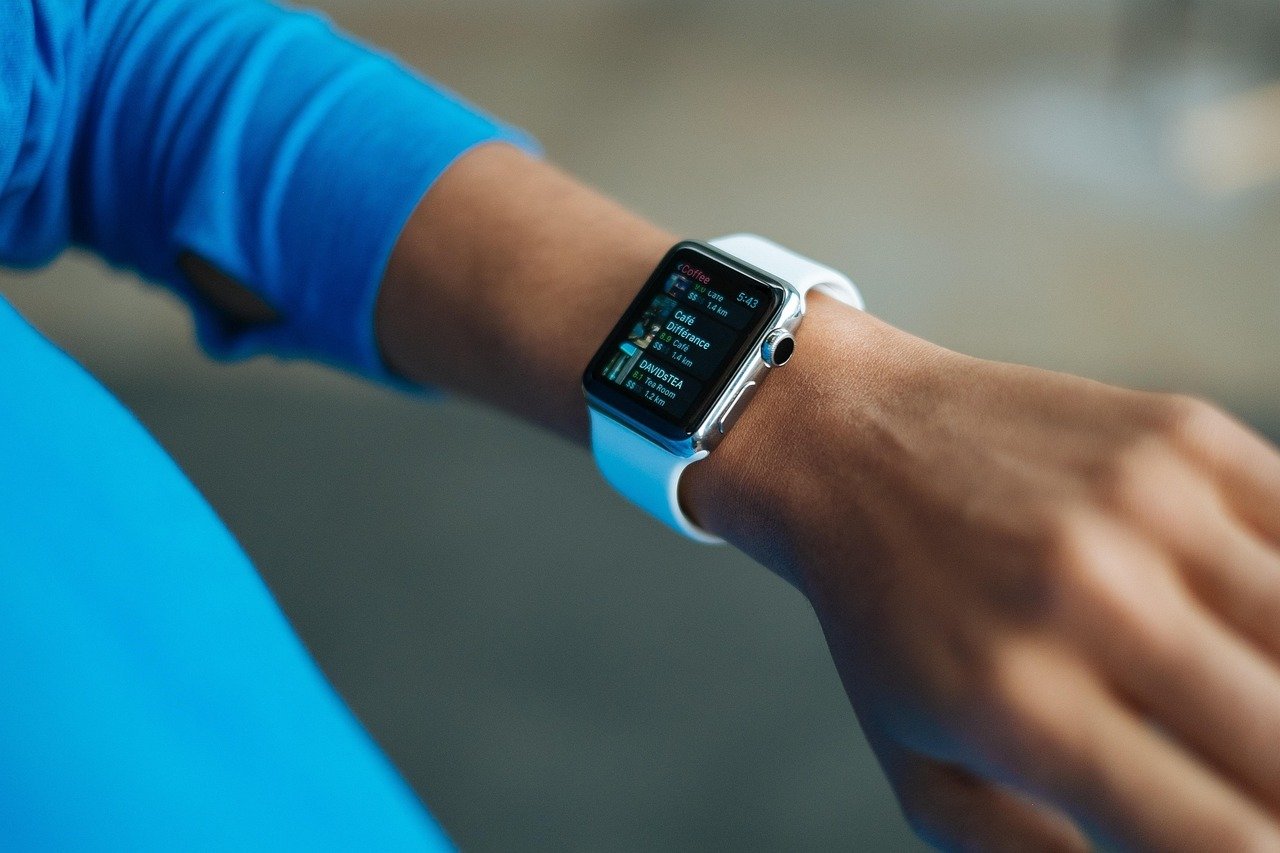
WEARABLES are best at capturing trends in your personal life. A review of research published in SPORTS MEDICINE, summarized by ANDROID AUTHORITY, found that most devices measure HEART RATE within approximately 3 percent, and were much less accurate for CALORIES and SLEEP.
That’s expected given how the technologies work – SLEEP STAGES are calculated based on movements and pulse, rather than the actual brainwaves measured in a SLEEP LAB, and fit, movement and sweat can impact the reading.
When searching for the best longevity AI app, most of them base their predictions on data from WEARABLES, so their accuracy depends on how correctly they are using this information. That is why you should not focus on the number representing your SCORE; do not forget to check what other functions the application has, pay attention to whether your data is being kept safe, and if the company offers CUSTOMER SUPPORT in the case of medical questions. The best longevity AI-powered app is the one that supports your DOCTOR’S guidance, not one that tries to replace it. For more health tracking insights, explore AI IN FITNESS and our LAB RESULT EXPLAINER GUIDE.
So consider the following to be the most useful wearable DATA:
- RESTING HEART RATE – a gradual increase over days or weeks can be a sign of STRESS, ILLNESS, lack of SLEEP or reduced FITNESS.
- DAILY STEPS and ACTIVE TIME – a good baseline to see if you’re being active.
- SLEEP DURATION and regularity – more reliable than individual SLEEP STAGE metrics.
An IRREGULAR HEART RHYTHM is a good reason to see a DOCTOR, but not a DIAGNOSIS.
What BLOOD TESTS Can Tell You Over Time
BLOOD TESTS look at cells, chemicals and other substances that indicate how your BODY is working. Some of the most common tests are outlined below. For comprehensive guidance on lab metrics, explore our LAB RESULT EXPLAINER GUIDE and our insights on AI WEARABLES, BLOOD TESTS & HEALTH DATA.
| Test | What it can reflect |
|---|---|
| FULL BLOOD COUNT | Red and white cells and platelets, which can point to ANEMIA or INFECTION |
| HBA1C (Track with our AI-POWERED A1C–EAG TREND CALCULATOR) |
Average BLOOD SUGAR over roughly the past two to three months |
| LIPID PANEL | CHOLESTEROL and TRIGLYCERIDES, related to HEART HEALTH |
| TSH | THYROID FUNCTION |
Reference ranges are usually set to capture 95 percent of the POPULATION, so around one in twenty BLOOD TESTS will be outside the ‘normal’ range, notes the BRITISH LIVER TRUST. Different lab equipment and TECHNOLOGY means each sets its own ranges.
Individual results also vary day to day – a study by researchers at OXFORD’S BENNETT INSTITUTE details how biological variation, how the BLOOD SAMPLE was handled and the machinery in the lab all contribute to variability. FASTING, the time of day, HYDRATION LEVELS, recent illnesses and MEDICATIONS can also impact the result. For managing glucose trends, you can also check our HBA1C GLUCOSE CONVERTER CALCULATOR.
For that reason, a slightly abnormal result is not necessarily a sign of DISEASE, and a normal result is not necessarily stable. SERIAL RESULTS – tests done on the same day and using the same equipment – and discussion with a CLINICIAN are much more informative.
Working the Two Together
The aim is to have a simple record you can take to a PROFESSIONAL. Here is how you can effectively combine your data for better health insights and proactive wellness tracking:
Focus on a few measures
HEART RATE, steps and SLEEP are a good start, along with BLOOD TESTS recommended by your DOCTOR based on your age and risk factors. For comprehensive tracking, check our LAB RESULT EXPLAINER GUIDE.
Establish a baseline
Wear your device consistently for two to four weeks before assessing. Learn more about performance optimization through AI IN FITNESS.
Record context
If you’re ill, have travelled, started a new MEDICATION or experienced significant STRESS or a change in diet, this can explain a dip or peak.
Keep records together
Store lab results, including the reference range printed on the report, and the date of the test. Ideally, tests should be done at the same lab and under similar conditions, such as FASTING.
Look at trends in weeks and months
Do not judge by single days – bring a summary or screenshot to a MEDICAL APPOINTMENT. Track metric conversions using our HBA1C GLUCOSE CONVERTER CALCULATOR.
A gradual increase in HEART RATE plus insufficient SLEEP and rising HBA1C is worth raising with your DOCTOR, for instance. Neither alone is worth losing sleep over, but together they can indicate a change in HEALTH STATUS.
Cautions: Overthinking, ANXIETY And PRIVACY
Don’t overthink it
Constant checks can cause unneeded ANXIETY without any benefit to your HEALTH. If you find a particular metric stressful, limit your checks to once a week.
Think before getting more tests
Ordering extra BLOOD TESTS without a clear CLINICAL INDICATION can lead to unnecessary further investigation. Ask your DOCTOR about which tests are right for you.
Don’t let apps replace medical advice
CHEST PAIN, faintness, sudden SHORTNESS OF BREATH or weakness need to be taken seriously and investigated urgently, regardless of any WEARABLE TECHNOLOGY you may be using.
Look after your data
Information from your health apps and devices is often not covered by privacy laws that protect medical professionals and insurers, which the FEDERAL TRADE COMMISSION (FTC) has noted. The FTC has also advised that consumers should be aware that health apps may share data with third parties, and should take advantage of any encryption and PRIVACY FEATURES they offer. Practical steps to protect your data could include:
- Checking what information an app is requesting and only giving it if necessary
- Using strong passwords and TWO-STEP VERIFICATION where available
- Only granting permission for features you need
- Deleting apps and data you no longer need
Conclusion
WEARABLES and BLOOD TESTS answer different questions. Your device shows how your days are going; your LAB RESULTS show what is happening beneath the surface. Neither is perfect, and neither should be judged by a single reading. For deeper insights into metric tracking, explore our LAB RESULT EXPLAINER GUIDE and AI WEARABLES, BLOOD TESTS & HEALTH DATA.
If you use a blood test analysis app with AI to track your results, remember that its explanations are only as good as the data and design behind them. They cannot examine you, know your full history or replace a CLINICIAN’S judgment. Before using one, check how it handles your data, whether it shows the lab’s own REFERENCE RANGES, and whether it clearly tells you to discuss unusual results with a HEALTHCARE PROFESSIONAL.
FAQs about WEARABLES & BLOOD TEST
Find answers to common questions regarding health metrics tracking. For more guidance, visit our LAB RESULT EXPLAINER GUIDE and our insights on AI WEARABLES, BLOOD TESTS & HEALTH DATA.
HEART RATE and step counts are generally the most reliable measures. CALORIE ESTIMATES and SLEEP-STAGE SCORES are less accurate, so use them only to spot broad trends. Explore how technology assists through AI IN FITNESS.
There is no single schedule. It depends on your age, FAMILY HISTORY, existing CONDITIONS and MEDICINES. Ask your DOCTOR which tests suit you and how often to repeat them. Learn more about tracking via HBA1C GLUCOSE CONVERTER CALCULATOR.
Not automatically. REFERENCE RANGES cover about 95 percent of healthy PEOPLE, so some healthy individuals fall outside them. Your DOCTOR will consider repeat results, SYMPTOMS and your history. Review related signs with our SIGNS OF PERIMENOPAUSE guide.