
Pelvic Floor Health and Pelvic Floor Therapy: A Complete Guide
Discover how to improve core stability, manage dysfunction symptoms, and harness the targeted power of specialized physical therapy for lifelong pelvic wellness.
Your pelvic floor health affects far more than bladder control. These muscles, connective tissues and nerves form a supportive foundation for your pelvis and help regulate urination, bowel movements, sexual function and pelvic stability. When this system becomes weak, overly tense or poorly coordinated, you may notice symptoms such as urinary leaking, constipation, pelvic pressure or pain with sex. The good news is that many pelvic floor dysfunction problems can be assessed and treated with a personalized approach.
Pelvic floor therapy combines targeted exercises, breathing techniques, movement training, manual therapy and other strategies based on your specific symptoms and goals. Pelvic floor physical therapy can also support recovery during pregnancy, after childbirth or following pelvic surgery. In this complete guide, you’ll learn how the pelvic floor works, what causes common problems, which symptoms deserve attention and what to expect during assessment and treatment. Understanding your pelvic health is an important step toward comfortable movement, better function and improved quality of life.
Important: Pelvic floor symptoms can have several causes. This article provides general health information and does not replace an examination or individualized medical advice.
What Is the Pelvic Floor?
Think of your pelvic floor as a living support system at the bottom of your pelvis. It contains layers of muscles, connective tissues and nerves that extend from the front of the pelvis toward the coccyx. These structures help support the pelvic organs while contributing to bladder control, bowel control and sexual function. Unlike a rigid platform, the pelvic floor constantly adjusts. It needs enough strength to respond when you cough or lift something heavy. At the same time, it must allow appropriate relaxation when you urinate or have a bowel movement. That balance is central to good pelvic floor function.
Where Is the Pelvic Floor Located?
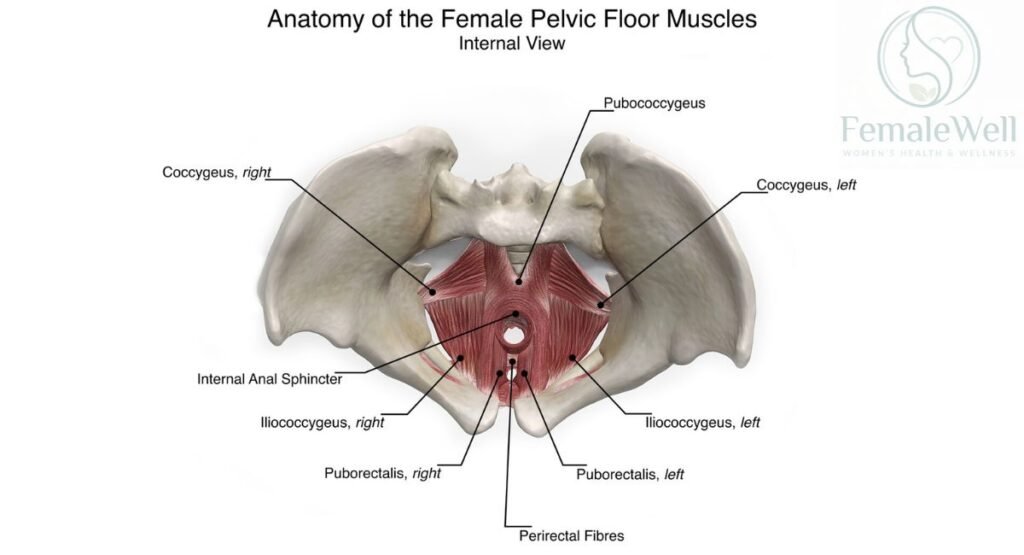
The pelvic floor muscles form the muscular base of the pelvis. They stretch broadly between the pubic bone at the front and the coccyx at the back. Openings for the urethra and anus pass through this muscular region. In women, the vagina also passes through it.
Pelvic Floor Muscles and Supporting Tissues
The pelvic floor contains several layers of muscle alongside connective tissues and supporting structures. The levator ani muscle group forms a major component. These structures work with the abdominal wall, diaphragm and spinal muscles to create core stability. Therefore, pelvic health is not simply about one muscle you can squeeze on command.
Pelvic Floor Anatomy in Women and Men
Although the basic pelvic floor architecture is similar in men and women, important anatomical differences exist. Women have a vaginal opening and reproductive organs within the pelvic region while men have structures including the prostate. Both can develop pelvic floor dysfunction, urinary symptoms, bowel problems and pelvic pain. Men may also experience pelvic floor problems after prostate surgery.
How the Pelvic Floor Changes With Age, Pregnancy and Childbirth
Life can change the demands placed on the pelvic floor. Pregnancy increases pressure on the pelvic structures while childbirth can stretch muscles and supporting tissues. Hormonal changes around menopause can also influence pelvic tissues. Aging does not make leakage or pelvic discomfort inevitable but muscle strength and tissue characteristics can change over time.
What Does the Pelvic Floor Do?
A healthy pelvic floor performs several jobs at once. It supports your bladder, bowel and reproductive organs while helping maintain continence. It also responds to changes in abdominal pressure when you cough, sneeze, laugh, lift or exercise. NHS guidance describes the pelvic floor as an important support system for the pelvic organs and a contributor to bladder and bowel control. There is another important detail: the pelvic floor must know when to switch off. During urination and bowel movements, appropriate muscle relaxation allows normal emptying. A healthy pelvic floor therefore needs both activation and release. In simple terms, it should be responsive rather than permanently clenched.
What Does the Pelvic Floor Do?
An overview of the 4 key physiological roles supported by your pelvic floor muscles.
-
Bladder & Urinary Control 25%
Controls sphincter muscles to prevent involuntary leakage and regulate healthy urination flow.
-
Support for Pelvic Organs 25%
Acts as a supportive hammock holding the bladder, uterus, and bowel securely in place.
-
Bowel Control 25%
Coordinates anal sphincter relaxation and contraction to ensure smooth, controlled bowel movements.
-
Sexual Function 25%
Enhances muscular responses, pelvic circulation, and sensation during intimate activities.
Bladder and Urinary Control
Your pelvic floor contributes to bladder control by helping maintain closure around the urethra. When pressure rises suddenly during coughing, sneezing, jumping or exercise, the muscles can respond to help prevent urinary leaking. Problems with strength, timing or coordination can contribute to urinary incontinence.
Bowel Control
The same system contributes to bowel control. Your pelvic floor helps you hold stool and gas until an appropriate time. During a bowel movement, however, those muscles need to relax and coordinate with the abdominal and rectal muscles. Poor coordination can contribute to constipation, difficulty emptying or bowel leakage.
Sexual Function
The pelvic floor also has a role in sexual function. Its muscles participate in sexual arousal and orgasm while appropriate relaxation allows comfortable penetration. Excessive pelvic muscle tension can contribute to pain with sex. However, sexual pain can arise from many conditions including infection, hormonal changes, endometriosis and vulvar disorders, so pelvic floor dysfunction is only one possible explanation.
Support for the Pelvic Organs
Your pelvic floor helps support the bladder, rectum and reproductive organs. When supporting structures become weakened or damaged, some people develop pelvic organ prolapse. This may create sensations such as pelvic heaviness, pressure or a bulge within the vagina.
Role During Pregnancy and Childbirth
During pregnancy, the pelvic floor carries additional load while continuing to manage bladder and bowel function. Vaginal childbirth can stretch the muscles and surrounding tissues. A thoughtful approach to pregnancy pelvic floor care therefore considers strength, relaxation, breathing and movement rather than focusing only on contraction exercises.
What Is Pelvic Floor Dysfunction?
Pelvic floor dysfunction describes problems that occur when the pelvic floor does not contract, relax or coordinate normally. It does not automatically mean weak muscles. Some people have reduced pelvic floor muscle strength while others have excessive pelvic floor tension or poor relaxation. Some have a mixture of problems.
That distinction matters because treatment should match the problem. Someone with stress-related urinary incontinence may benefit from supervised strengthening. Someone with painful intercourse and a tight pelvic floor may need relaxation and graded movement instead. NICE recommends individualized pelvic floor muscle training that considers the person’s ability to contract and relax as well as symptoms and goals.
What Is Pelvic Floor Dysfunction?
Pelvic floor dysfunction occurs when muscles fail to contract, relax, or coordinate normally. It does not automatically mean weak muscles.
Hypotonic (Weakness)
Reduced muscle tone and loss of structural support strength.
- Urinary or fecal incontinence
- Pelvic organ prolapse pressure
- Core instability
Mixed Dysfunction
A complex blend of both high muscle tension and underlying weakness.
- Pain combined with leakage
- Unpredictable muscle spasms
- Poor motor muscle control
Hypertonic (Tightness)
Excessive muscular tension with an inability to properly relax.
- Pelvic and intimacy pain
- Difficulty emptying bladder/bowel
- Frequent urinary urgency
Overactive or Tight Pelvic Floor Muscles
An overactive pelvic floor remains more contracted than it should. You might notice pelvic pain, difficulty relaxing, painful intercourse or discomfort during bowel movements. Some people also experience urinary urgency or difficulty emptying. In these situations, repeatedly squeezing the muscles may not address the underlying problem.
Weak Pelvic Floor Muscles
Weakness can reduce the pelvic floor’s ability to support the pelvic organs or respond quickly to pressure. Urinary leaking during exercise or coughing is a common example. Weakness may occur after childbirth or pelvic surgery and can also develop with aging or prolonged straining.
Pelvic Floor Muscle Coordination Problems
Strength is only one piece of the puzzle. Your muscles also need correct timing. For example, the pelvic floor should respond appropriately when you cough and then relax when you need to urinate. Poor muscle coordination can therefore create symptoms even when the muscles appear reasonably strong.
Common Causes and Risk Factors
Pelvic floor problems may follow pregnancy, childbirth, pelvic or abdominal surgery, chronic constipation or repeated increases in abdominal pressure. Physical trauma and some neurological conditions can also affect pelvic floor function. Lifestyle factors may contribute as well although they rarely tell the whole story.
Pregnancy, Vaginal Delivery, Aging, Constipation and Surgery
These factors can place different stresses on the pelvic floor. Vaginal birth may stretch the muscles and connective tissues while chronic constipation can expose them to repeated straining. Pelvic procedures can alter tissues or nerve function. Prostate surgery may contribute to urinary incontinence in men.
Pelvic Floor Dysfunction Risk Factors
Understanding how life events, surgery, and habits impact pelvic muscle tissue and lead to specific symptoms.
| Risk Factor | Possible Effect | Symptoms That May Appear |
|---|---|---|
| Pregnancy | Increased pelvic pressure |
Urinary leakage
Pelvic pressure
|
| Vaginal childbirth | Muscle and tissue stretching |
Leakage
Pelvic heaviness
|
| Chronic constipation | Repeated straining |
Bowel dysfunction
Prolapse symptoms
|
| Pelvic surgery | Tissue or nerve changes |
Pelvic pain
Bladder symptoms
|
| Prostate surgery | Sphincter and pelvic muscle changes |
Urinary incontinence
|
| Menopause and aging | Changes in tissues and muscle function |
Urinary symptoms
Pelvic discomfort
|
Signs and Symptoms of Pelvic Floor Dysfunction
Pelvic floor problems do not always announce themselves with obvious pain. Sometimes the first clue is leaking while running, laughing or lifting your child. Another person may notice a constant need to find a bathroom. Someone else may feel pressure or discomfort during intercourse. Because symptoms overlap with many other medical conditions, persistent problems deserve proper evaluation. Pelvic health services commonly assess urinary incontinence, urgency, prolapse, bowel dysfunction, constipation and pelvic pain.
Pelvic Pain and Pressure
Pelvic pain may occur around the lower abdomen, vagina, perineum or rectum. Some people also experience low back pain, hip pain or tailbone pain. Muscle tension can contribute but it is important to remember that pelvic pain has many possible causes.
Urinary Leakage and Urgency
Urinary symptoms can include leakage during exercise, coughing or sneezing as well as sudden urinary urgency. Some people experience urinary frequency and need to urinate unusually often. Others leak while trying to reach the toilet. These patterns can provide useful clues during an assessment.
Difficulty Emptying the Bladder
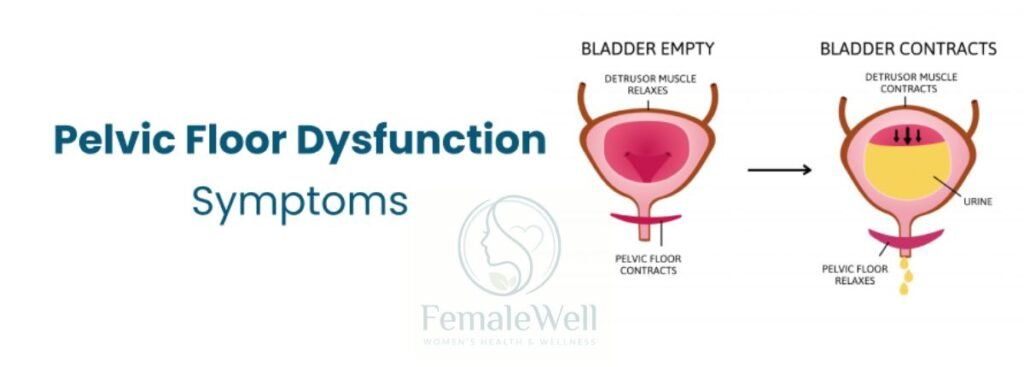
A pelvic floor that does not relax appropriately may contribute to difficulty starting or completing urination. However, urinary retention can have several causes. New or significant difficulty emptying the bladder should therefore receive medical evaluation rather than being treated solely with exercises.
Constipation and Bowel Leakage
Pelvic floor dysfunction may contribute to constipation, difficulty passing stool or incomplete emptying. Conversely, chronic constipation can place repeated strain on pelvic structures. Bowel leakage and difficulty controlling gas also deserve assessment because several gastrointestinal and neurological conditions can cause similar symptoms.
Pain During Sex
Painful intercourse can occur at the vaginal entrance or deeper within the pelvis. Some people describe burning or tearing while others feel pressure or involuntary tightening. A pelvic floor therapist can assess muscular contributions but painful sex may also require gynecological or sexual-health evaluation.
Vaginal Heaviness or a Feeling of Something “Dropping”
A sensation of pelvic heaviness or a vaginal bulge can occur with pelvic organ prolapse. You might notice pressure after standing for a long time or during exercise. Some people describe it as feeling that something is “dropping.” These symptoms warrant assessment rather than self-treatment alone.
Symptoms After Pregnancy and Childbirth
The postpartum period can bring urinary leakage, pelvic pressure, bowel changes, pain with sex, abdominal weakness or difficulty returning to exercise. These symptoms are common but that does not mean you must simply live with them. NHS pelvic-health services specifically treat antenatal and postnatal pelvic floor problems.
When Pelvic Floor Symptoms Need Medical Evaluation
Seek professional assessment for persistent or worsening urinary or bowel symptoms, significant pelvic pressure, new vaginal bulging or unexplained pelvic pain. Blood in the urine or stool, inability to urinate, severe pain or symptoms accompanied by fever require prompt medical attention because they may indicate conditions beyond pelvic floor dysfunction.
What Is Pelvic Floor Therapy?
Pelvic floor therapy is a specialized form of rehabilitation that aims to improve pelvic floor function. Depending on your symptoms, treatment may focus on pelvic floor strengthening, relaxation, coordination, breathing, bladder habits, bowel habits or movement. It can also address surrounding areas such as the hips, abdomen and lower back. The modern approach is far broader than simply performing Kegels. NICE describes pelvic floor muscle training as exercise that can improve strength, endurance, power or relaxation and recommends that programmes be tailored to the individual's ability, symptoms and goals.
What Is Pelvic Floor Therapy?
Far broader than simply performing Kegels, modern pelvic therapy follows guidelines (such as NICE) to tailor exercise and habits to your individual ability, symptoms, and goals.
Pelvic Muscle Function
45% FocusTargeted training structured around individual muscle tension and capacity.
Habits & Physiology
30% FocusBehavioral adjustments that reduce daily intra-abdominal pressure and strain.
Surrounding Systems
25% FocusRehabilitating supporting musculoskeletal systems connected to pelvic stability.
What Does a Pelvic Floor Physical Therapist Do?
A pelvic floor physical therapist evaluates how your pelvic floor and surrounding structures function together. The assessment may consider strength, tension, breathing, movement and functional tasks. Treatment then becomes a personalized programme rather than a generic collection of exercises.
Pelvic Floor Physical Therapy vs. Occupational Therapy
Pelvic floor physical therapy is the more commonly recognized term for musculoskeletal pelvic rehabilitation in the USA and UK. Some professionals also provide pelvic floor occupational therapy. Training and professional scope vary between countries, so you should check the practitioner's qualifications and registration where you live.
Who Can Benefit From Pelvic Floor Therapy?
Adults of different ages and sexes may benefit when pelvic symptoms affect daily life. This includes people with urinary or bowel symptoms, prolapse, pelvic pain, postpartum concerns or problems after pelvic surgery. Athletes may also seek help when leakage, pressure or pelvic discomfort interferes with training.
Conditions Commonly Treated With Pelvic Floor Therapy
Pelvic Health Conditions & Treatment Focus
Explore common symptoms and how specialized physical therapy tailors rehabilitation to address each specific condition.
| Condition | Possible Symptoms | Common Rehabilitation Focus |
|---|---|---|
| Urinary incontinence | Leakage with activity |
Pelvic floor muscle training
|
| Overactive bladder | Urgency & frequency |
Bladder retraining & coordination
|
| Prolapse | Pressure or heaviness |
Strengthening & symptom management
|
| Constipation | Straining Incomplete emptying |
Bowel retraining & coordination
|
| Pelvic pain | Pain Muscle tension |
Relaxation & movement therapy
|
| Postpartum dysfunction | Leakage Discomfort |
Individualized rehabilitation
|
| Post-prostate surgery | Urinary leakage |
Pelvic floor rehabilitation
|
When Should You See a Pelvic Floor Specialist?
Consider a pelvic floor therapist when symptoms persist, interfere with exercise or affect intimacy, work, sleep or confidence. You may also benefit from assessment after childbirth or pelvic surgery. A specialist can help determine whether the main issue involves weakness, excessive tension, poor coordination or another condition.
What Happens During a Pelvic Floor Therapy Evaluation?
Your first pelvic floor therapy evaluation usually begins with questions rather than an examination. The therapist may ask about your symptoms, medical history, pregnancies, childbirth, surgery, bladder habits, bowel movements, exercise routine and pain history. Your personal goals matter too because treatment should help you return to meaningful activities. The physical assessment may then examine posture, breathing, abdominal function, hips, spine and pelvic floor movement. Depending on your symptoms, an internal pelvic floor assessment may be discussed. You should receive an explanation beforehand and have the opportunity to give or decline consent.
What Happens During an Evaluation?
Your first pelvic floor therapy session bridges the gap between understanding your medical history and physically assessing your body to build a personalized rehabilitation plan.
Comprehensive Interview
Discussion-BasedThe evaluation usually begins with detailed questions rather than an exam. The therapist listens to your story and goals.
External Assessment
Movement & SupportThe physical assessment examines interconnected systems that provide core support and stability.
Pelvic Floor Assessment
Internal (Optional)Depending on symptoms, an internal assessment may be discussed to evaluate specific muscle state.
Medical and Symptom History
Your medical history helps the therapist identify patterns. Pregnancy, childbirth, previous injuries, pelvic surgery, constipation, urinary symptoms and chronic pain may all provide useful clues. You may also discuss when symptoms started, what triggers them and what makes them better or worse.
Posture, Movement and Abdominal Assessment
The therapist may assess your movement patterns, posture, breathing and range of motion. The abdomen and hips may also be examined because pelvic floor function does not occur in isolation. Core weakness, poor movement mechanics or restricted hip mobility can influence how you load the pelvic region.
Pelvic Floor Muscle Assessment
A pelvic floor muscle assessment may examine contraction, endurance and relaxation. The therapist may also assess whether you can coordinate the muscles with breathing or functional movement. The goal is not simply to measure how hard you can squeeze but to understand how the system behaves.
What Is an Internal Pelvic Floor Examination?
An internal pelvic floor assessment may involve a vaginal or rectal examination when clinically appropriate. It allows a trained professional to assess the internal muscles, muscle tone and coordination more directly. An internal assessment is not automatically necessary for every patient and should never be performed without appropriate consent.
Is an Internal Assessment Painful?
The examination should be explained clearly and performed respectfully. Some people experience pressure or discomfort while others find it straightforward. If you experience significant pain, tell the therapist immediately. You have the right to ask questions, pause or decline an internal assessment.
Consent, Privacy and What You Can Expect
Consent is central to pelvic health care. A professional should explain what they want to assess and why. NHS patient guidance also emphasizes that healthcare professionals should obtain consent before examination or treatment.
How Does Pelvic Floor Therapy Work?
Effective pelvic floor treatment depends on the underlying problem. Someone with stress urinary incontinence may need progressive strengthening while someone with pelvic pain may need pelvic floor relaxation, breathing and gradual movement. The objective is better function rather than simply stronger muscles. Treatment may also involve manual therapy, education, movement retraining and bladder or bowel strategies. NICE recommends supported bladder retraining for women experiencing urinary frequency, urgency or mixed incontinence alongside other appropriate interventions.

Pelvic Floor Strengthening Exercises
Pelvic floor exercises can improve muscle strength and endurance when weakness contributes to symptoms. A supervised programme should match your ability and progress gradually. NICE specifically recommends individualized pelvic floor muscle training rather than a one-size-fits-all routine.
Relaxation and Down-Training Techniques
If the muscles remain excessively active, treatment may emphasize muscle relaxation rather than additional strengthening. Breathing exercises and gentle movement can help you learn what a relaxed pelvic floor feels like. The aim is improved control rather than permanent contraction.
Kegel Exercises
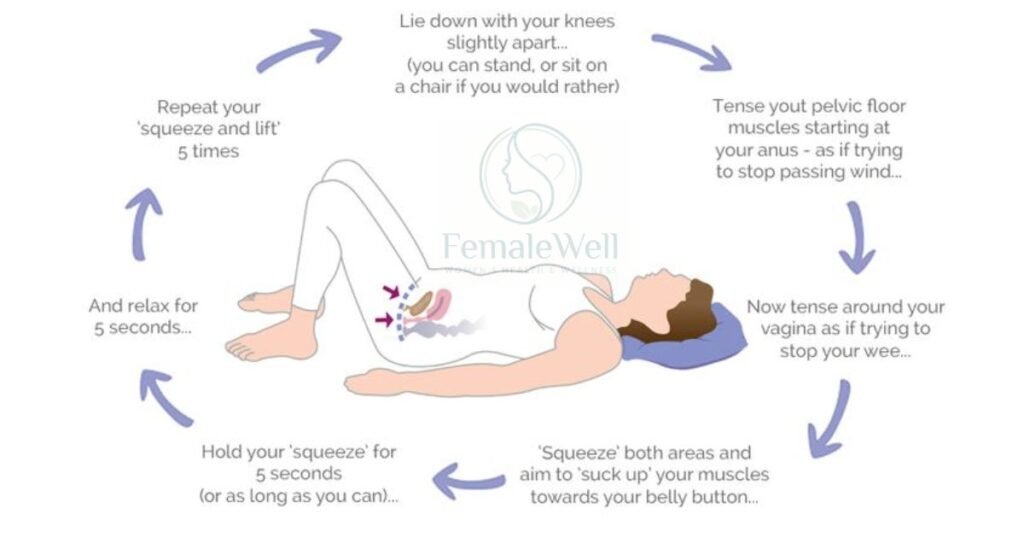
Kegel exercises involve deliberate contraction and relaxation of the pelvic floor. They can be useful for selected problems, particularly some forms of urinary incontinence. However, Kegels are not automatically appropriate for everyone. If your symptoms involve excessive pelvic floor tension, repeated contractions may be counterproductive.
Breathing and Pelvic Floor Coordination
Your diaphragm and pelvic floor respond to changes in abdominal pressure. Learning coordinated breathing can help you connect pelvic floor activation with everyday movement. This becomes particularly useful during lifting, exercise and functional tasks.
Manual Therapy
Manual therapy may be used to address soft-tissue restriction, muscle tenderness or scar-related discomfort when clinically appropriate. Techniques vary considerably. Treatment should be based on the assessment rather than performed simply because it is part of a standard package.
Biofeedback
Biofeedback can provide information about muscle activity and help some patients understand whether they are contracting or relaxing effectively. It is an adjunct rather than a universal requirement. NICE guidance does not recommend routine biofeedback for every pelvic floor muscle training programme.
Stretching and Mobility Exercises
Pelvic floor mobility often involves more than the pelvic floor itself. Depending on the problem, therapy may address the hips, spine, abdomen and surrounding muscles. Gentle stretching and controlled movement can form part of rehabilitation when stiffness or excessive tension contributes to symptoms.
Bladder and Bowel Training
Bladder retraining can help selected people with urgency and frequency. NICE recommends supported bladder retraining for women with urinary frequency, urgency or mixed incontinence. Bowel retraining may involve toileting habits, positioning and strategies that improve coordinated emptying.
Pelvic Floor Therapy for Common Conditions
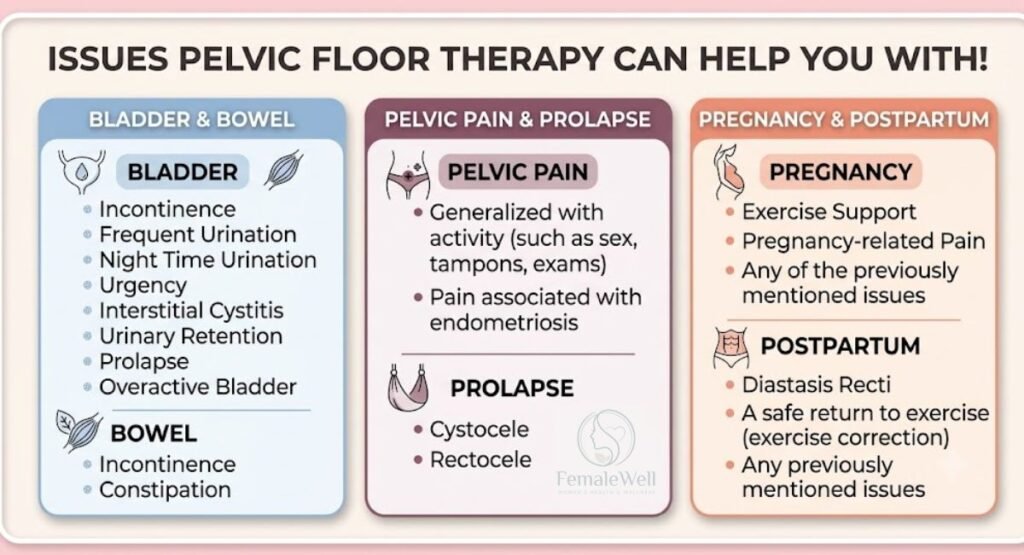
However, therapy does not replace diagnosis. For example, pelvic pain related to endometriosis may benefit from pelvic rehabilitation while still requiring gynecological management. Likewise, urinary symptoms can result from infection, neurological disease or other urological conditions. The value of pelvic floor rehabilitation becomes clearer when you look at the problems it can address. NHS pelvic-health services commonly manage urinary incontinence, prolapse, bowel dysfunction, constipation, pelvic pain and postpartum conditions.
Urinary Incontinence
For selected women with stress or mixed urinary incontinence, supervised pelvic floor muscle training is a recognized first-line treatment. NICE recommends a supervised programme for at least three months in these circumstances. The programme should include assessment of both contraction and relaxation.
Pelvic Organ Prolapse
With pelvic organ prolapse, therapy may focus on pelvic floor muscle training, movement strategies and symptom management. Some patients may also need other nonsurgical treatments or specialist gynecological care. The appropriate approach depends on the type and severity of prolapse.
Pelvic Pain
Pelvic pain can involve the muscles, nerves, joints, connective tissues or internal organs. Pelvic therapy may address muscle tension, breathing, movement and functional patterns when these contribute to symptoms. Persistent pain deserves a broader medical assessment because the pelvic floor is only one possible source.
Painful Intercourse
Painful intercourse may occur because the pelvic floor muscles tighten involuntarily or cannot relax appropriately. Therapy can sometimes help improve muscle awareness, relaxation and graded tolerance. Yet vaginal pain can also arise from hormonal, dermatological, infectious or gynecological causes.
Pregnancy-Related Pelvic Floor Problems
Pregnancy pelvic floor care may address urinary leakage, pelvic pressure, pelvic girdle symptoms and preparation for physical demands during pregnancy. Treatment should be individualized to gestational stage, symptoms and obstetric circumstances rather than following a rigid exercise plan.
Postpartum Recovery
Postpartum recovery involves more than returning to exercise quickly. The pelvic floor may need time to recover after vaginal birth while abdominal tissues may also change. Diastasis recti, perineal injury, urinary leakage and pain with sex can all influence the return-to-activity plan.
Constipation and Bowel Dysfunction
Constipation can place repeated strain on pelvic structures. Therapy may address toileting posture, breathing and pelvic floor coordination when poor relaxation contributes to difficult evacuation. Persistent constipation still warrants appropriate dietary, medication and medical assessment when indicated.
Overactive Bladder
An overactive bladder can involve urinary urgency, frequency and sometimes urge incontinence. Pelvic health treatment may include bladder retraining, behavioral strategies and coordination work. Persistent urinary symptoms should also be assessed for infection and other urological causes.
How Long Does Pelvic Floor Therapy Take to Work?
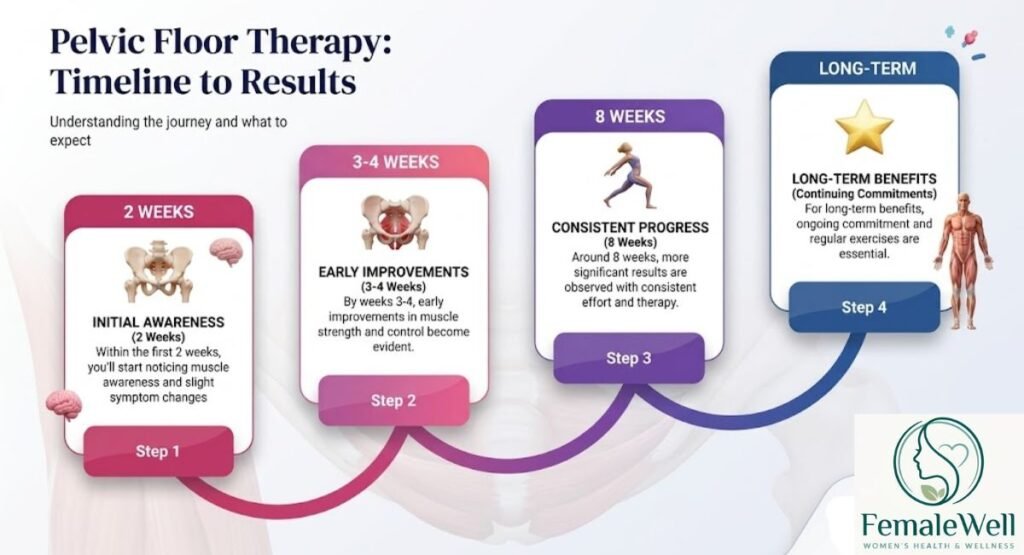
There is no universal stopwatch for pelvic floor recovery. Treatment duration depends on the condition, symptom severity, duration, muscle function and adherence to the treatment plan. Some people notice meaningful changes relatively early while others need longer rehabilitation. For women with stress or mixed urinary incontinence, NICE recommends a supervised pelvic floor muscle training programme lasting at least three months. That does not mean everyone needs exactly three months of treatment. Your therapist should reassess progress and adjust the programme according to your response.
When Might You Start Noticing Improvement?
Improvement can appear in different ways. You may notice fewer leaks, better bladder control, less pelvic pressure or improved confidence during exercise. Pain-related recovery can be less predictable. The important point is to measure progress against your original treatment goals rather than expecting a dramatic overnight change.
How Many Therapy Sessions Are Usually Needed?
The number of pelvic floor therapy sessions varies. A straightforward problem may require fewer visits while longstanding pain or multiple pelvic conditions can require a longer programme. Frequency should be based on assessment, response and access to appropriate home exercises.
Factors That Affect Recovery
Recovery can be influenced by muscle weakness, excessive tension, coordination problems, childbirth history, surgery, chronic constipation, pain duration and adherence. Psychological stress can also influence some pain conditions. A good pelvic floor treatment plan considers the whole person rather than focusing on one isolated muscle.
Importance of Exercises at Home
Home exercises help reinforce skills learned during treatment. However, doing more is not necessarily better. Correct technique and appropriate progression matter. If an exercise increases pain, urinary symptoms or pelvic tension, discuss it with your therapist instead of simply adding more repetitions.
What Results Can You Expect?
Results depend on the problem being treated. Possible improvements include better continence, fewer urgency episodes, improved bowel function, reduced pelvic pain and greater confidence with movement. In selected patients, therapy may also improve sexual function and comfort.
When Should Treatment Be Reassessed?
Reassessment makes sense when symptoms fail to improve, become worse or change significantly. It may also be appropriate when you reach your initial goals and want to progress toward running, lifting or another activity. NHS physiotherapy services advise patients to seek follow-up when symptoms are not improving or become worse.
Kegels and Pelvic Floor Exercises: Are They Right for Everyone?
The internet often treats Kegel exercises as the universal answer to pelvic floor problems. Reality is more nuanced. Pelvic floor muscle training has good clinical value for selected conditions but the programme should consider strength, endurance, relaxation and coordination. NICE specifically defines pelvic floor muscle training broadly rather than as contraction alone. A useful way to think about it is this: your pelvic floor needs an accelerator and a brake. Strength provides the accelerator. Relaxation provides the brake. Good pelvic floor function requires both.
How to Perform Kegels Correctly
Correct technique matters more than frantic repetition. You should aim to contract the pelvic floor without repeatedly squeezing the buttocks, thighs or abdominal muscles. Avoid using repeated interruption of urine flow as your routine exercise because normal bladder emptying should not depend on stopping the stream.
How Often Should You Do Kegels?
There is no single schedule that suits every person. A therapist may prescribe different repetitions, contraction times and rest periods depending on your pelvic floor muscle strength. Current NHS exercise guidance demonstrates progressive contraction and relaxation work but emphasizes listening to your body and seeking professional advice if exercises cause pain.
When Kegels Can Help
Kegels may help when reduced pelvic floor strength contributes to stress urinary incontinence or certain prolapse-related symptoms. Supervised training is particularly valuable because a clinician can check whether you are actually contracting and relaxing the muscles correctly.
When Kegels May Make Symptoms Worse
If you already have excessive pelvic floor tension, repeated contractions may not be the answer. Someone with pelvic pain, painful intercourse or difficulty relaxing may need a different strategy. This is why symptoms should guide treatment rather than assuming that every pelvic problem reflects weakness.
Why Relaxing the Pelvic Floor Can Be Just as Important as Strengthening It
A muscle that never relaxes cannot perform every job effectively. Your pelvic floor must tighten when appropriate and release when necessary. Good pelvic floor relaxation supports normal urination, bowel movements and comfortable sexual activity. Modern pelvic rehabilitation therefore considers both contraction and relaxation.
When Should You See a Pelvic Floor Specialist?
You do not need to wait until symptoms become severe before asking for help. If pelvic floor symptoms interfere with exercise, work, sleep, bowel habits, bladder control or intimacy, an assessment can clarify what is happening. Pelvic health physiotherapy services routinely manage conditions ranging from incontinence and prolapse to constipation and pelvic pain.
Finding the right professional also matters. Depending on where you live, you may encounter a pelvic health physiotherapist, physical therapist, occupational therapist, urogynecologist, urologist or colorectal specialist. Professional titles and referral pathways differ across the USA, UK and EU.
Symptoms You Shouldn't Ignore
Persistent urinary leaking, new bowel leakage, significant pelvic pressure, vaginal bulging, unexplained pelvic pain or difficulty emptying your bladder deserve assessment. Severe pain, blood in urine or stool, inability to urinate or symptoms with fever require more urgent medical attention.
Choosing a Qualified Pelvic Floor Therapist
Look for a professional with recognized training in pelvic health and experience treating your specific concern. Ask how they assess pelvic floor function and whether they offer individualized treatment. A good clinician should also explain alternatives and respect your preferences and boundaries.
What Questions Should You Ask Your Therapist?
Useful questions include: What might be causing my symptoms? Do I need an internal assessment? What will treatment involve? What should I do at home? How will we measure progress? When should I expect reassessment? These questions help turn a vague appointment into a clear plan.
What to Expect From Your First Appointment
Your first appointment may involve a detailed history followed by movement and pelvic floor assessment. You may leave with education, exercises or behavioral strategies. An internal examination may be offered when relevant but it should be discussed first and performed only with appropriate consent.
How to Prepare for Pelvic Floor Therapy
Bring information about your symptoms, previous surgery, pregnancies, medications and relevant medical conditions. If bladder or bowel symptoms are prominent, your clinician may ask you to keep a symptom diary. Most importantly, write down your main goals. “I want to run without leaking” is much more useful than simply saying “my pelvic floor feels weak.”
Understanding Pelvic Floor Symptoms
| What You Notice | What It May Involve | What To Consider |
|---|---|---|
| Leakage during exercise | Reduced strength or coordination | Pelvic floor assessment |
| Sudden urgency | Bladder and pelvic floor coordination | Bladder retraining may help |
| Pelvic pressure | Possible prolapse or support problem | Medical assessment |
| Pain with sex | Muscle tension or another pelvic condition | Comprehensive evaluation |
| Constipation | Bowel habits or poor pelvic relaxation | Bowel assessment |
| Postpartum leakage | Pelvic floor weakness or coordination changes | Postpartum rehabilitation |
| Pelvic pain | Muscle tension or another condition | Broader medical evaluation |
The most important lesson is simple: your symptoms are worth investigating. You do not have to accept urinary leakage, pelvic pressure, painful intercourse or bowel problems simply because they are common. Evidence-based pelvic floor rehabilitation can be highly individualized and may help you regain confidence in everyday movement, exercise and intimate life.
FAQs About Pelvic Floor Health
Understanding pelvic health can remove much of the uncertainty around symptoms. Because symptoms can overlap with gynecological, urological, colorectal, and musculoskeletal conditions, use these answers as an informative starting point rather than a personal diagnosis.
Can Pelvic Floor Dysfunction Go Away on Its Own?
Some temporary symptoms may improve as tissues recover after pregnancy or an acute injury. Persistent pelvic floor dysfunction, however, deserves assessment when it affects daily activities or quality of life. Early evaluation can identify whether weakness, tension or coordination problems are involved.
Can Pelvic Floor Therapy Help After Childbirth?
Yes. Postpartum recovery may include rehabilitation for urinary leakage, pelvic pressure, pelvic pain, bowel symptoms or difficulty returning to exercise. Specialist health services (such as NHS pelvic-health teams) specifically provide care for antenatal and postnatal pelvic floor problems.
Can Pelvic Floor Dysfunction Cause Back Pain?
It can contribute to low back pain in some people because pelvic floor muscles work closely with the abdomen, hips and spine. However, back pain has many possible causes. A thorough clinical assessment should consider the entire musculoskeletal system rather than automatically blaming the pelvic floor.
Can Pelvic Floor Problems Affect Sex?
Yes. Pelvic floor overactivity, high tension, and poor relaxation capacity can contribute significantly to painful intercourse. Pelvic rehabilitation may help when muscle dysfunction plays a role. However, sexual pain can also involve hormonal, infectious, dermatological, gynecological or psychological factors and may require broader multidisciplinary care.
Are Kegels Safe for Everyone?
No single exercise suits everyone. Kegel exercises can be helpful when weakness contributes to symptoms but may be inappropriate or counterproductive when the pelvic floor is already excessively tense or hypertonic. A professional evaluation can determine whether strengthening, relaxation, or coordination training is required.
How Long Does Pelvic Floor Therapy Take?
Treatment length depends on the specific condition and your individual response. For women with stress or mixed urinary incontinence, clinical guidelines (such as NICE) recommend supervised pelvic floor muscle training for at least three months. Other concerns may require shorter or longer rehabilitation.
Is Pelvic Floor Therapy Painful?
Treatment is tailored to your comfort and should not routinely cause significant pain. Some techniques or assessments may create temporary pressure or mild discomfort. Always inform your therapist if something hurts—you can discuss alternatives and stop an examination or treatment at any time.
Can Men Have Pelvic Floor Dysfunction?
Absolutely. Men have a pelvic floor and can experience urinary leakage, urgency, bowel symptoms, pelvic pain, and sexual dysfunction. Post-surgical recovery following prostate procedures is another key area of male pelvic rehabilitation. Specialist services treat pelvic floor dysfunction in both men and women.